When words escape you or feel too heavy to say, art gives your nervous system a softer way in. If you are neurodivergent, you might know how quickly a therapy session can turn into pressure to explain, summarize, and make sense on demand, even when your brain is already overloaded. Art therapy for neurodivergent individuals offers another path, one that lets you start with color, texture, images, and movement so your feelings have a place to land before you try to name them. At Spotted Rabbit Creative Arts Therapy in and around Rochester, NY, you can choose art, talk, or a mix of both in a studio-like space designed for unmasking and real nervous system relief, not performance.
Neurodiversity is a term that reflects the natural variety in how people think, learn, feel, and process the world. The NIH uses neurodiversity to describe the diversity of human brains, often discussed in the context of autism, ADHD, dyslexia, and other differences. Nearly 1 in 5 people identify as neurodivergent in the U.S., which means you are not alone in wanting care that fits your brain instead of asking you to reshape yourself to fit the room.
If you have tried talk therapy and left feeling misunderstood, overanalyzed, or exhausted, you are not alone. You may simply need a different entry point. Art therapy for neurodivergent individuals can help you start with what is true in your body and your senses, then move toward words when they are ready.
key takeaways
• Neurodiversity is natural. The NIH defines neurodiversity as a normal variation in how people think, learn, and feel.
• You are not alone. Nearly 1 in 5 Americans identify as neurodivergent, showing just how many people are searching for affirming care.
• Art therapy gives you another language. When words fail, color, texture, and movement can communicate emotion and build understanding.
• Regulation starts with the body. Art-making supports grounding, pacing, and nervous system balance before deep verbal processing.
• You decide what therapy looks like. At Spotted Rabbit Creative Arts Therapy, art and talk therapy blend seamlessly, and it's easy for you to connect with a therapist for neurodivergent individuals who customize the session to your needs on that specific day.
Art Therapy for Neurodivergent Individuals
Counseling That Starts With Fit, Not Fixing
Neurodivergence is not a problem to solve, and it’s very common, with 1 in 5 Americans identifying as neurodivergent. It is a way of being that shapes how you process sensory input, communication, emotion, and stress. Many neurodivergent people learn to mask early. You may practice appearing calm while your nervous system is on high alert. You may overexplain because being misunderstood has consequences. You may look fine on the outside while you are burning out on the inside.
Neurodivergent counseling should not ask you to become more palatable. It should help you feel safer in your body, clearer in your needs, and more supported in your relationships and daily life. That starts with fit. Fit means the pace matches your processing. Fit means your sensory needs are respected. Fit means you are not treated like a puzzle to solve.
In therapy, neurodivergent experiences often show up as sensory overload, burnout, masking fatigue, shutdowns, big emotions that arrive fast, and attention that shifts based on interest or stress. These are not character flaws. They are nervous system cues and communication cues. For parents, that last part matters. What looks like “defiance” is often communication: overwhelm, fatigue, anxiety, sensory discomfort, or a system that is maxed out.
"Sometimes it is the people no one can imagine anything of who do the things no one can imagine."
alan turing
Why Neurodivergent Counseling Needs a Different Pace
Talk-only therapy can be a great fit for many people, but it can also demand a lot from a neurodivergent nervous system. Fast verbal processing, sustained eye contact expectations, rapid emotional labeling, and open-ended questions can create pressure. Under pressure, many neurodivergent people shut down, dissociate, people-please, or go into performance mode. That can look like being “high functioning” in session while feeling depleted afterward.
Common friction points include decoding social expectations while also trying to be vulnerable, finding words under stress, explaining context and nuance repeatedly, feeling analyzed instead of understood, and leaving sessions with a masking hangover that takes hours or days to recover from. If any of that sounds familiar, it makes sense. Your brain is working hard to translate. A better fit often begins by lowering the translation burden.
At Spotted Rabbit Creative Arts Therapy, the goal is not “acting normal.” The goal is safety and fit so your nervous system can settle enough to do meaningful work, at a pace that respects your capacity.
A Personalized Approach into Therapy
Art therapy for neurodivergent individuals changes the entry point. You can communicate through images, symbols, and sensory choices, then add words if and when they fit. Instead of forcing a tidy narrative, you can start by making what is true.
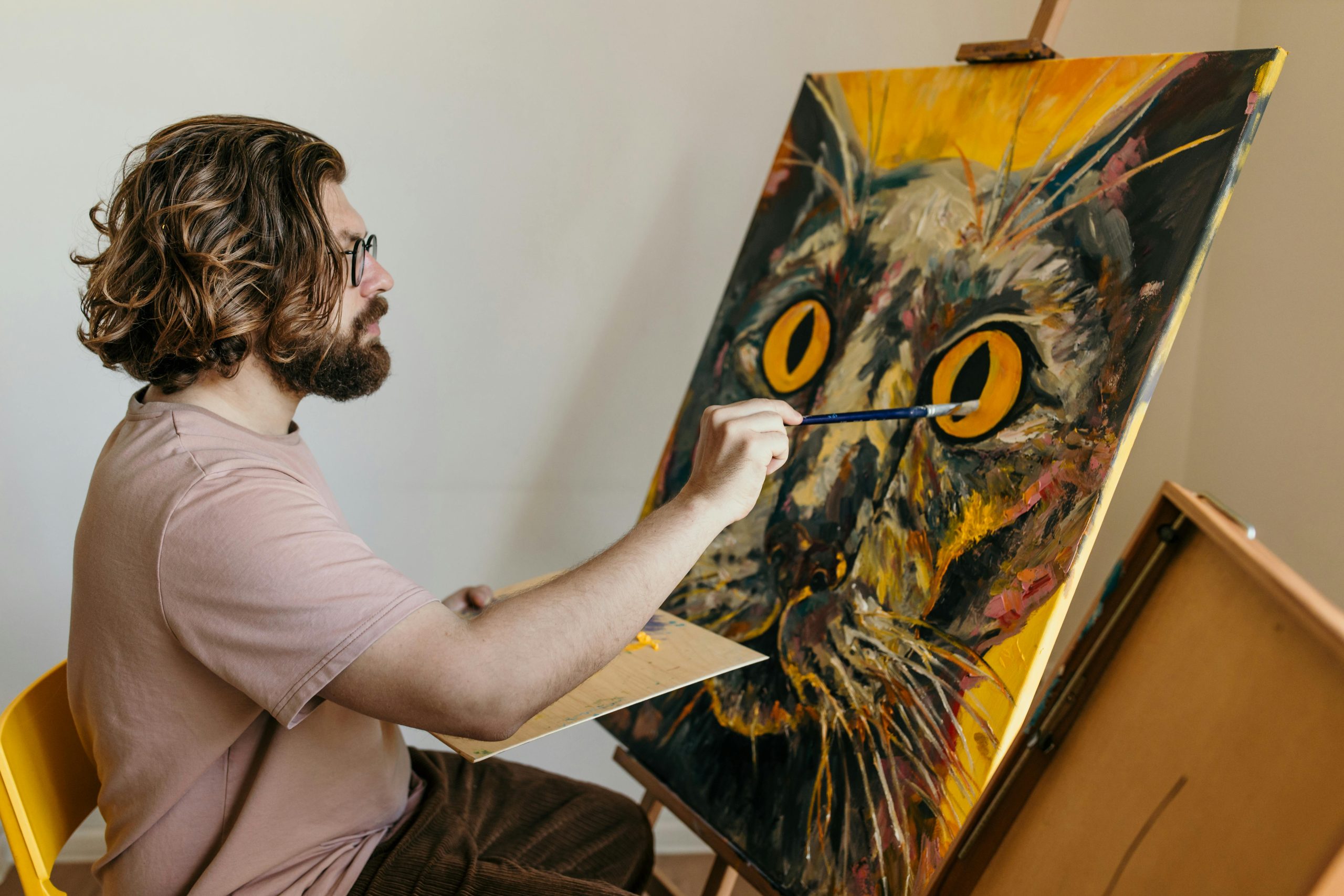
A session might include sketching while you talk, because your hands help you stay present. It might include collage to map overwhelm, needs, and boundaries without needing to say everything out loud. It might include clay or textured materials for grounding and release, especially when you feel stuck in your head.
This is not about being “good at art.” It is about having more ways to communicate, more ways to regulate, and more ways to be understood.
How Art Therapy Supports Regulation, Communication, and Self-Trust
Neurodivergent art therapy supports your nervous system in a practical way. When your hands are busy, your pacing often slows. When feelings move onto the page, they can feel less like a flood and more like something you can look at, hold, and understand. For many people, that shift is the difference between getting overwhelmed and staying connected.
Art-making can support nervous system settling through sensory grounding, rhythm and repetition, choice and control, and the ability to externalize emotion. You decide the intensity. You decide the pacing. You decide whether the work feels quiet and contained or bold and expressive. That sense of agency matters, especially for neurodivergent individuals who have spent years being told how they should feel, look, or behave.
Art therapy for neurodivergent individuals is also flexible. Some sessions are more reflective. Some are more skill-building. Some are about emotional release. Some are about building a map of what helps and what harms, so you can advocate for yourself with clarity.
Communication When Words Are Not Showing Up
If you freeze, go blank, or feel flooded when asked direct questions, you are not failing therapy. You are having a nervous system response. Many kids, teens, and adults do not have access to words in moments of stress. That is not resistance. It is the brain protecting itself.
Images can carry complex experiences without demanding perfect language. A drawing can show the shape of anxiety. A color choice can express mood. A collage can hold contradictions. A texture can represent sensory overload in a way that words cannot capture quickly. This is one reason art therapy for neurodivergent individuals can feel relieving. It respects how communication actually works in the body. It gives you a place to start, even when speech is not available yet.
Self-Trust and Identity Support
So many neurodivergent people have learned to doubt themselves. You may have been told you are too sensitive, too intense, too quiet, too distracted, too blunt, too much. Over time, that messaging can create shame and disconnection.
Neurodivergent art therapy can support unmasking safely, learning your cues, building self-advocacy, and reducing shame. As you build awareness of your nervous system patterns, you can begin to name what helps, what drains you, and what you need. That is self-trust. It is also the foundation for boundaries, relationships, and a life shaped by values and authenticity instead of survival mode.
What Art Therapy for Neurodivergent Individuals Looks Like at Spotted Rabbit Studio
We offer a safe, creative, and radically affirming space for LGBTQIA+ and neurodivergent folks to explore their inner worlds without judgment or pressure. A founding principle here is that art-making is a powerful bridge between what you carry inside and what you can finally name out loud. You get to decide how you enter the work, and you get to do it in a space that does not demand performance.
"The world needs all kinds of minds."
temple grandin
A Nervous-System-Friendly Space to Slow Down
Therapy here feels more like stepping into a creative studio than sitting in a clinic. There is a choice built in from the start: materials, pacing, lighting, and how much you want to share. That choice is not a bonus. It is part of our approach to neurodivergent art therapy because we believe that choice supports safety.
You do not have to mask, explain, or translate your brain to be understood. You can pause. You can take your time. You can communicate in the ways that feel natural to you. The room is designed to support your nervous system, not challenge it.
You Choose Art, Talk, or a Mix
Some days you may want to talk. Some days you may want to make art quietly. Others you may want both. Your session can begin with sensory grounding through materials, then shift into reflection. It can begin with talking, then move into art when words get stuck. It can move back and forth as your nervous system changes.
This flexibility matters for neurodivergent clients because capacity changes. Stress, sleep, sensory load, school and work demands, and life transitions can all affect how accessible language feels. Therapy should be able to move with you.
Art Therapy for Neurodivergent Children and Adolescents
For kids and teens, art therapy for neurodivergent individuals often works because it meets them in their natural language: play, images, and creating. Art can lower the pressure of direct questions, especially when a child shuts down, goes quiet, or uses humor or silliness to avoid big feelings. Instead of forcing eye contact and answers, art offers a parallel path where emotions can emerge safely.
Adolescents often carry a lot beneath the surface, including identity questions, overwhelm, and masking fatigue. Art can help teens explore what they feel without having to “say it right” in the moment. It creates space to be honest without being put on the spot.
Parents can also gain insight because the art offers clues about stressors, sensory needs, and emotional themes, while honoring that behavior is communication, not defiance. If you want a deeper look at why creative approaches can be especially supportive for young people, visit 8 Powerful Reasons Kids Benefit from Arts Therapy.
Finding the Right Fit: Connecting With A Therapist for Neurodivergent Individuals
Finding the right therapist for neurodivergent individuals is not about forcing yourself to fit someone else’s style. It is about finding a space where you can stop performing and start healing. At Spotted Rabbit Creative Arts Therapy, the work is grounded in radically affirming, trauma-informed care that honors your full story. Our therapists share lived experience with the communities they serve, which means you do not have to spend sessions translating your queerness, your neurodivergence, or the way trauma shaped your life.
A therapist for neurodivergent individuals should respect sensory needs, collaborate on pacing, use consent-based approaches, and speak in strengths-based language. Therapy goals can include regulation, coping, self-advocacy, relationships, and support for school or work stressors. The work should feel sustainable, not like another demand.
Find a Therapist Who Gets You
At Spotted Rabbit Creative Arts Therapy, you do not have to mask to be taken seriously or over-explain yourself to be understood. Here, you can connect with a therapist for neurodivergent individuals who has the expertise and shared lived experience to support you. You can show up as you are, even if you are tired, overwhelmed, unsure, or out of words. Your therapist can blend art and talk therapy so you have more options for expression and more support when language is not available. Neurodivergent art therapy sessions are designed to feel more like a creative studio than a clinic, which makes it easier to settle, regulate, and stay present.
Your therapist will honor your story, your boundaries, and your capacity. The focus stays on safety and fit, not pushing you to perform or aiming for a version of you that looks more acceptable to someone else.
If you are thinking about starting, you do not need to have the right words ready. You can simply reach out and ask what you need to ask. People sometimes start with questions like: Can you connect me with a therapist for neurodivergent individuals? How do you support sensory needs in session? Can we use art-making when talking is hard? What does neurodiversity-affirming care mean in your practice?
Neurodivergent Art Therapy: Unmasking Without Pressure
If therapy has felt like a place where you have to explain yourself perfectly, neurodivergent art therapy can be a way forward. It gives you ways to communicate that do not depend on quick words or polished insight. It creates a path where safety comes first, where your nervous system can soften, and where your feelings have somewhere to land.
Neurodivergent support should feel like relief, not pressure. It should help you make sense of your needs without shame. It should help you build coping that fits your brain, and a life rooted in authenticity and values instead of expectations and survival mode.
Why Choose Us: A Soft Place to Land
Spotted Rabbit Creative Arts Therapy offers a studio-like space designed for comfort, choice, and real-life regulation. We provide radically affirming support for neurodivergent and LGBTQIA+ folks, grounded in trauma-informed care and deep respect for each individual’s story. Art and talk therapy work together here, and sessions are choice-led so you can show up in the way that feels most accessible. We support clients in Rochester, NY, and nearby areas, including neurodivergent children, adolescents, and adults. Art therapy for neurodivergent individuals is a core offering here, and our therapists are highly specialized in this area.
If you're a New York resident and would like to see how Spotted Rabbit Creative Arts Therapy can help you thrive, check out our website to connect and learn more, or schedule a free consultation with one of our art therapists. If you’re a Rochester local, we have offices in Brighton and Pittsford. If not, we also offer virtual sessions across New York.
If you would like to know more about how art therapy specifically benefits neurodivergent folks, please visit our Neurodivergence page.
Our High-Masking Neurodivergent Art Group also runs from April 23rd to June 18th. This group is for adults who are high-masking, low support needs, or late-diagnosed autistic, ADHD, or AuDHD. Not diagnosed? You’re welcome here, too! This class is best suited for neurodivergent adults who attend independently and do not require caregiver or one-on-one support in group or at home. If you have moderate or high support needs, please check out our Art Class Groups. You can also join the waitlist for future semesters.
Stay connected on more happenings and, updates and resources through our newsletter and social channels!