
Trauma Therapy
Spotted Rabbit StudioTrauma & ABANDONMENT THERAPY
Exhausted from trying to be perfect for everyone else?
...yep. you're not alone.
DO YOU....
• Feel like your body is always waiting for the next thing to go wrong...and for someone to leave?
• Feel like you are "too much," "not enough," or only lovable when you are useful, easy, productive, or fine?
• Find yourself overexplaining, apologizing, people-pleasing, or managing everyone else's emotions before your own?
• Shut down, go numb, dissociate, or disappear inside yourself when conflict, criticism, or intimacy feels too close?
• Struggle to trust your own memory, needs, feelings, or boundaries?
• Have a hard time relaxing, resting, or feeling safe, even when nothing is technically wrong?
• Notice old relationship patterns repeating, even when you are trying really hard to do things differently?
• Feel exhausted from masking your neurodivergence, queerness, chronic illness, pain, or real emotions to make other people more comfortable?
• Carry shame, guilt, or anxiety that feels bigger than the situation in front of you?
• Want support, but feel scared that a therapist will minimize your story, rush you, or make you explain basic parts of who you are?
IF SO, LET'S TALK.
you're on guard and waiting to be left again.
We notice the little things, but they are big to us.
A change in their tone.
A shorter text.
A different look on their face.
And suddenly you're wondering what you did.
Maybe they're busy, and nothing happened.
But we’re already preparing for the
possibility that they're pulling away.
Therapy That Feels Different. Start now, in-person or online.
Instead, this is a safe place to untangle the fear of
WHEN YOU'VE LEARNED THAT CONNECTION CAN DISAPPEAR WITHOUT WARNING...
...Keeping people happy can start to feel like a survival skill, right?
Complex Trauma Therapy for the Hurt You Learned to Minimize
...Therapy That Doesn't Try to "Fix" You.
Looking for a complex trauma therapist can feel vulnerable, especially if part of you is still wondering whether what happened to you "counts" as trauma. Maybe no one called it trauma. Maybe you grew up in a home where your feelings were too much, your needs were inconvenient, or love felt tied to being easy, useful, quiet, parentified, invisible, or fine.
At Spotted Rabbit Creative Arts Therapy, you can work with a complex trauma therapist who understands that trauma is not always one obvious event. Complex trauma can come from ongoing emotional neglect, relational harm, family enmeshment, chronic invalidation, identity-based harm, bullying, medical trauma, unsafe relationships, religious trauma, chronic illness, or years of masking who you are to stay connected and safe.
When you've spent years believing love is conditional...
...being fully known can feel incredibly vulnerable.
You can become funny enough, helpful enough, independent enough, easy enough. But...the goal isn't to become the perfect version of yourself so someone stays. It's to experience what it feels like to be known without having to disappear inside the relationship.

Affirming, Flexible Counseling for Trauma That Meets You Where You Are
Complex trauma therapy here at our studio is not stiff, clinical, or one-size-fits-all. We offer LGBTQIA+ and neurodivergent affirming therapy for complex trauma in Rochester, Brighton, Pittsford, Henrietta (and all of NYS through virtual sessions). Our licensed art therapists use talk, art-making, nervous system support, parts work, values-based therapy, and trauma-informed pacing to help you feel safer in your body and more like yourself in session and in your daily life.
Some sessions may look like talking with a cup of tea nearby. Some may involve drawing the shape of a feeling, tearing collage paper, building something with clay, mapping your parts, practicing a boundary script, or noticing where your body says yes, no, or "please do not make me decide right now."
You do not have to perform, mask, explain your whole identity, or tell your whole story before you are ready. Our complex trauma therapists will not try to "fix" you. You are not broken. Your nervous system adapted to what you lived through, and therapy for complex trauma can help you build more choice, more safety, and more room to be fully yourself.
Therapy for Complex Trauma That Moves at Your Pace
Complex trauma often happens in places where you were supposed to feel safe. The National Child Traumatic Stress Network describes complex trauma as exposure to multiple traumatic events, often interpersonal and invasive, along with the broad and lasting effects of those experiences.
That can include obvious harm, but it can also include the quieter stuff that gets minimized for years. Emotional neglect. Being the family therapist before you had a fully formed sense of self. Learning that having needs caused conflict and being punished for your gender, sexuality, sensitivity, disability, body, race, culture, or neurodivergent traits, and living in a house where everything looked fine from the outside, while your body learned to stay on alert all the time.
Your distress makes sense. You are not "too sensitive." You may have been under-supported for a very long time.
People-Pleasing & Over-Explaining
You may feel responsible for everyone else's comfort before your own. Saying no might feel unsafe, and you may find yourself apologizing, over-explaining, or trying to prevent conflict before it starts.
Perfectionism & Feeling You Have to Earn Love
Complex trauma can teach you that being useful, easy, productive, quiet, or impressive is the safest way to stay connected. You might feel like rest is irresponsible or that mistakes make you unlovable.
Shutdowns, Numbness, or Dissociation
When things feel too much, your system may go offline. You might feel disconnected from your body, lose time, go numb, or feel like you are watching your life from far away.
Anxiety That Will Not Clock Out
Your body may keep scanning for danger even when nothing is technically wrong. One text, shift in tone, task, or change of plans can send your nervous system into high alert.
Relationship Spirals & Trust Wounds
Closeness can feel comforting and terrifying at the same time. You may crave connection, then panic when someone gets too close, pulls away, or reminds your body of an old relationship pattern.
Exhaustion From Masking
If you are queer, trans, nonbinary, autistic, ADHD, late-diagnosed, self-diagnosed, chronically ill, disabled, or used to hiding your real needs, your trauma may include years of conforming to survive.
meet the team
Trauma Specialists
Spotted Rabbit's Licensed Creative Arts Therapists share your lived experiences, so we don't just "get it"...we ARE it. You don't have to do it alone. Reach out to say hello, we'd love to hear from you.
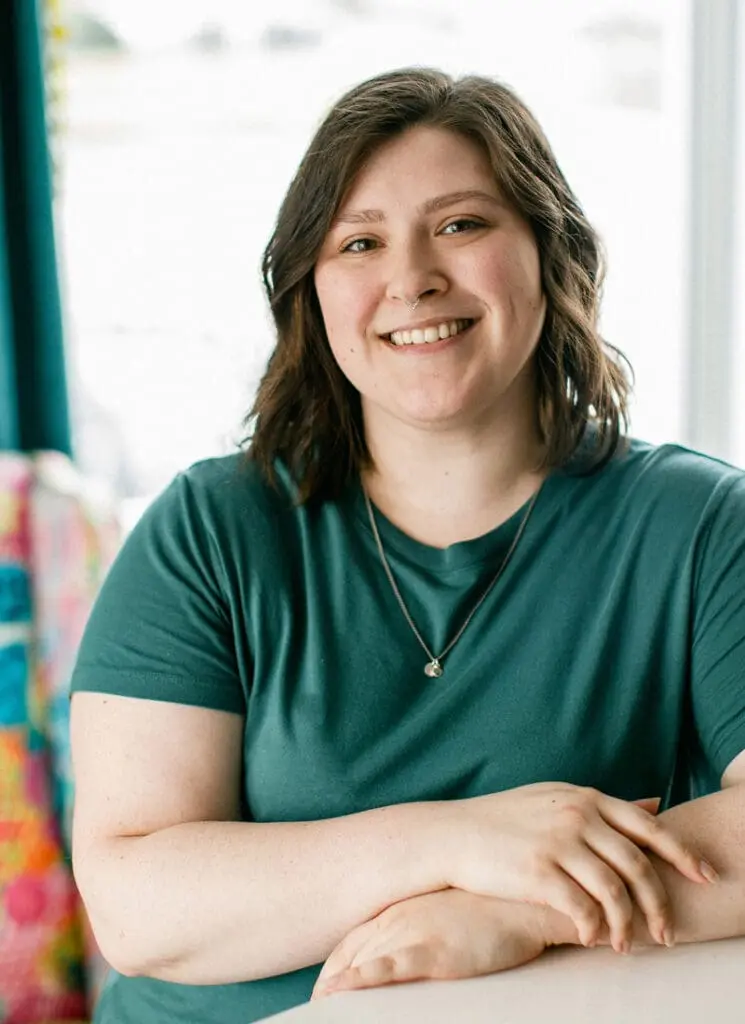
CIERA LACOUNT, LCAT
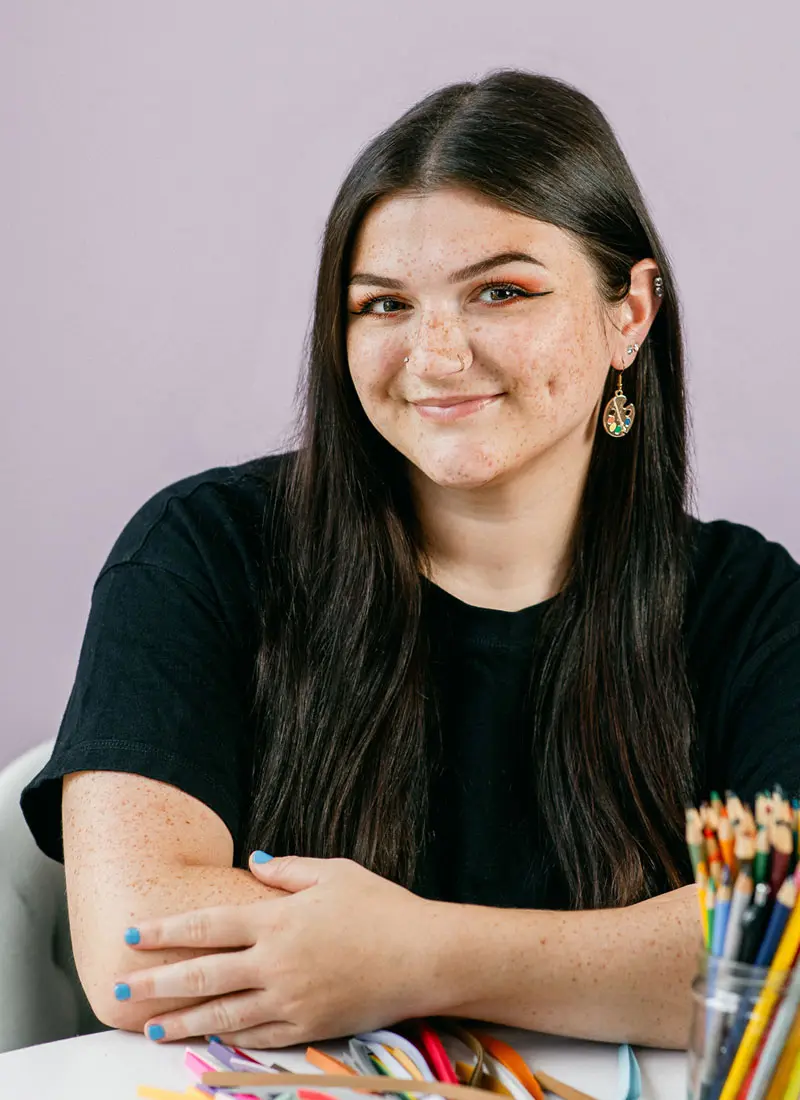
EMMA ANNABLE, LCAT-P
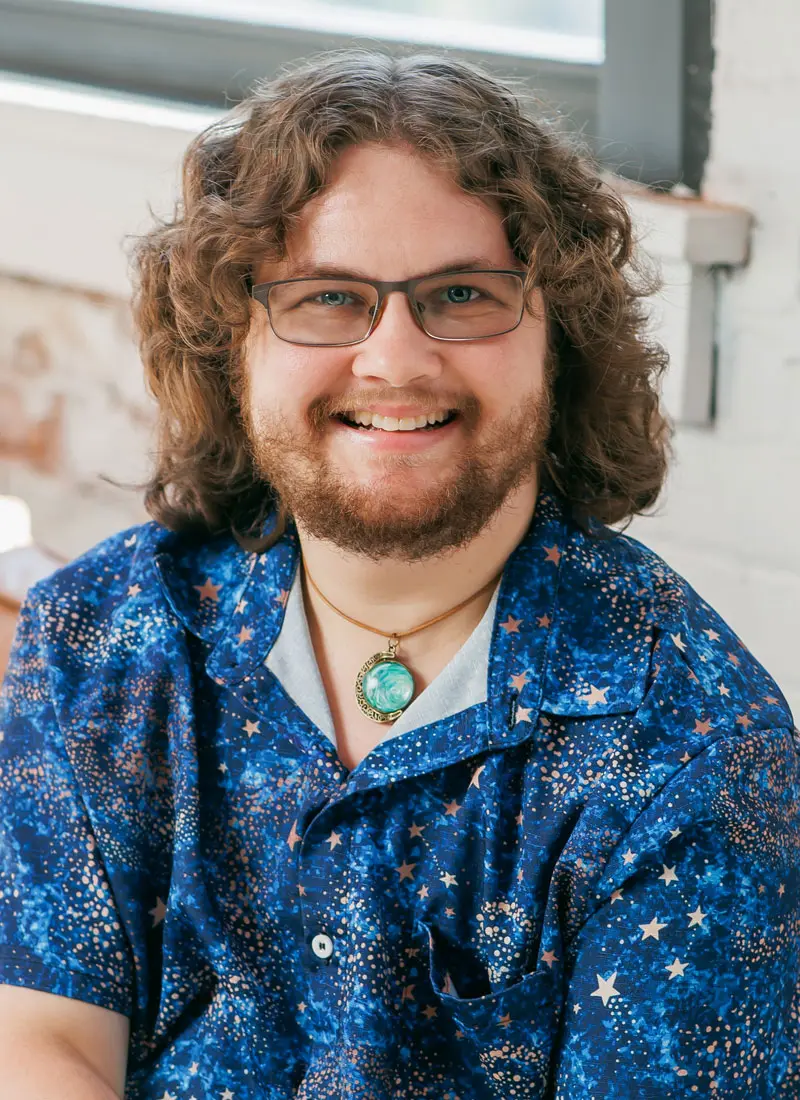
KYLE LANG, LCAT
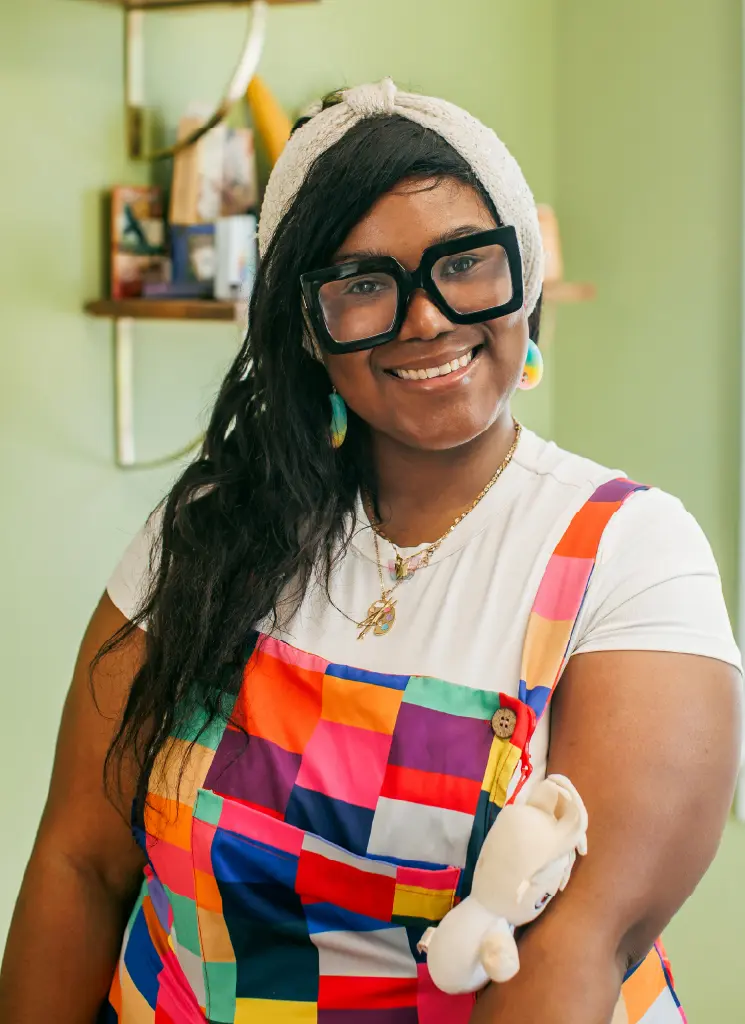
RACHEL WILSON, MS
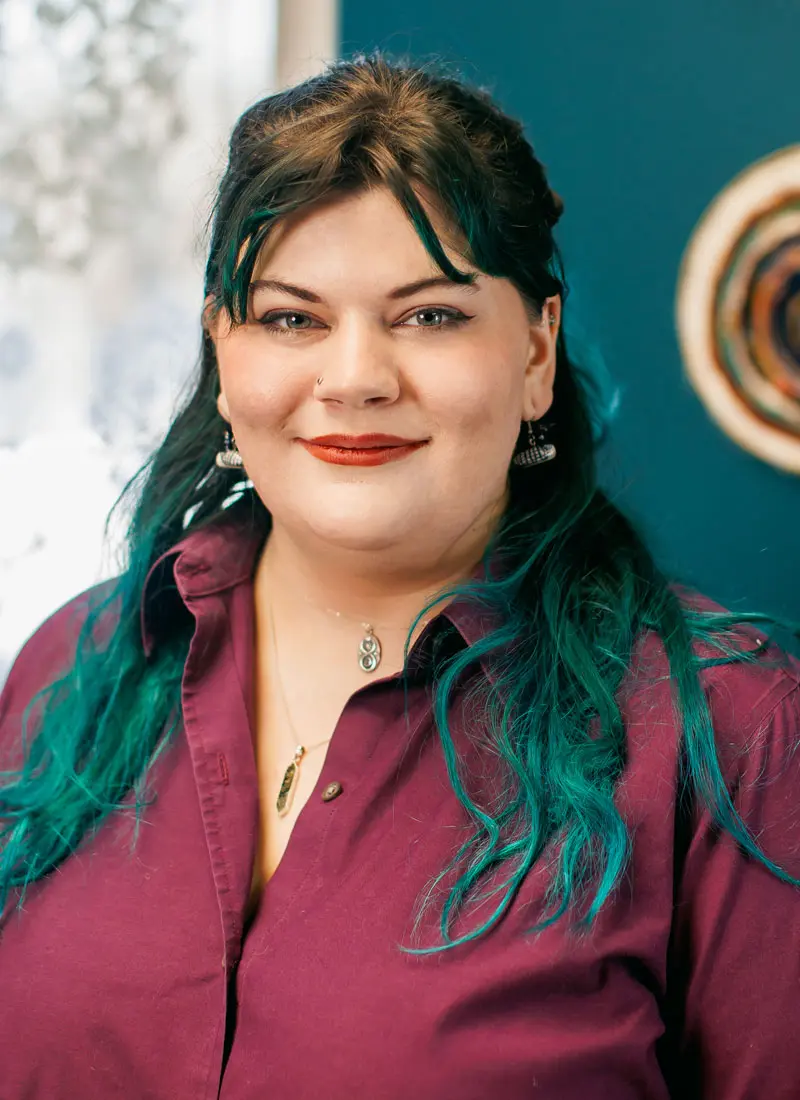
EVELYN VARLAN, LCAT-P
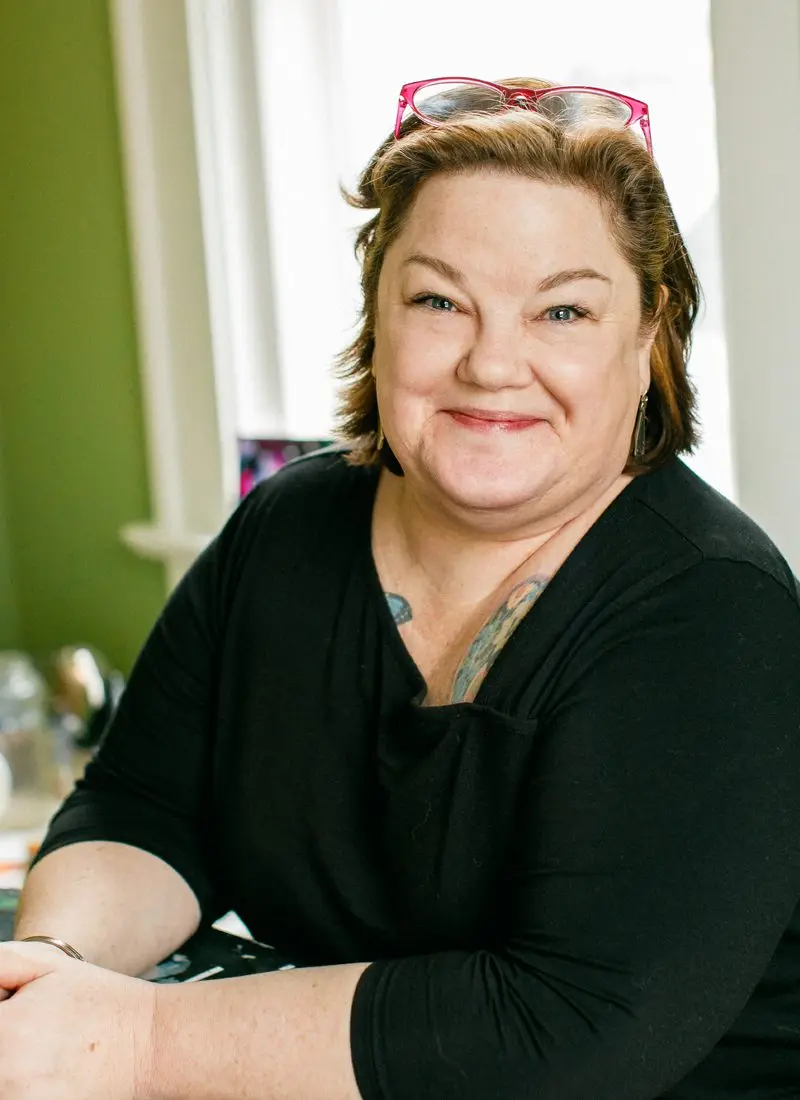
SHAWN SHANNON-MISSAL, LCAT
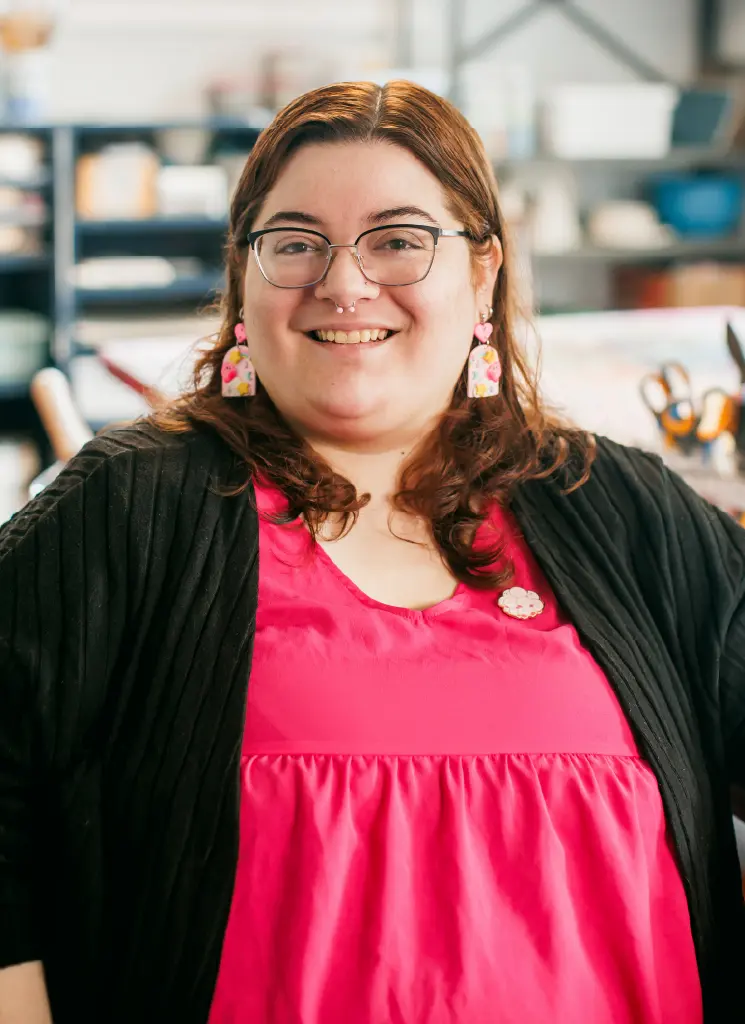
MARS REYNA, LCAT-P
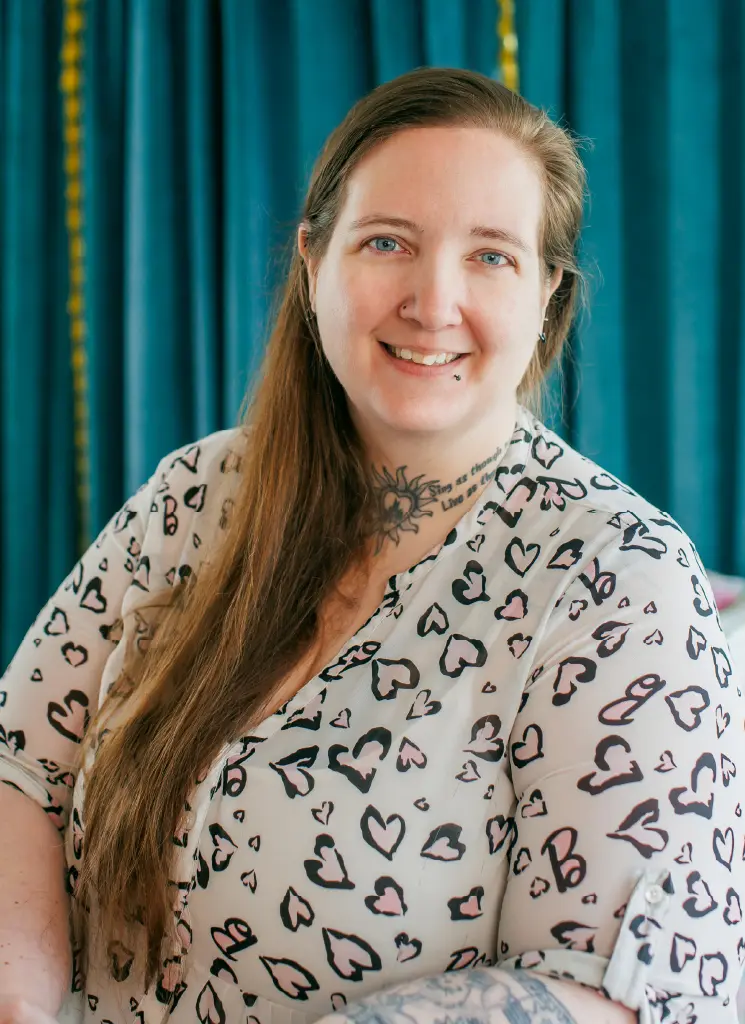
KACY MADIGAN, LCAT
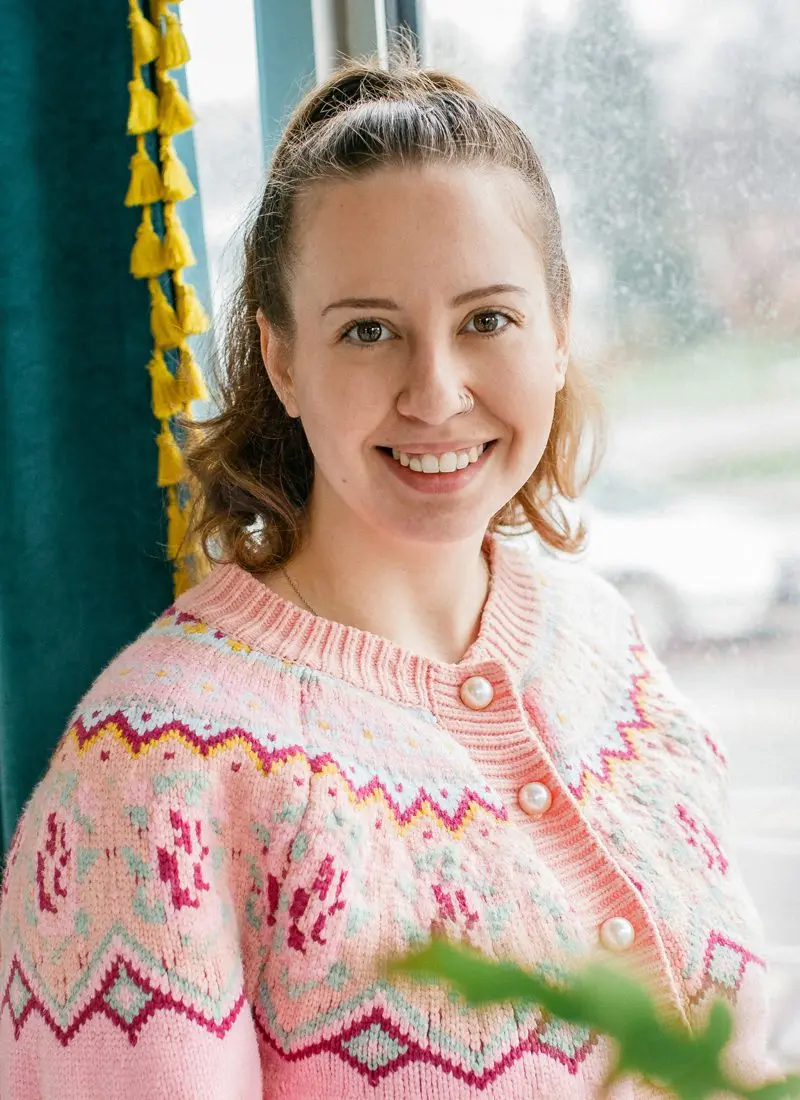
KAMYRN AARONSON, LCAT
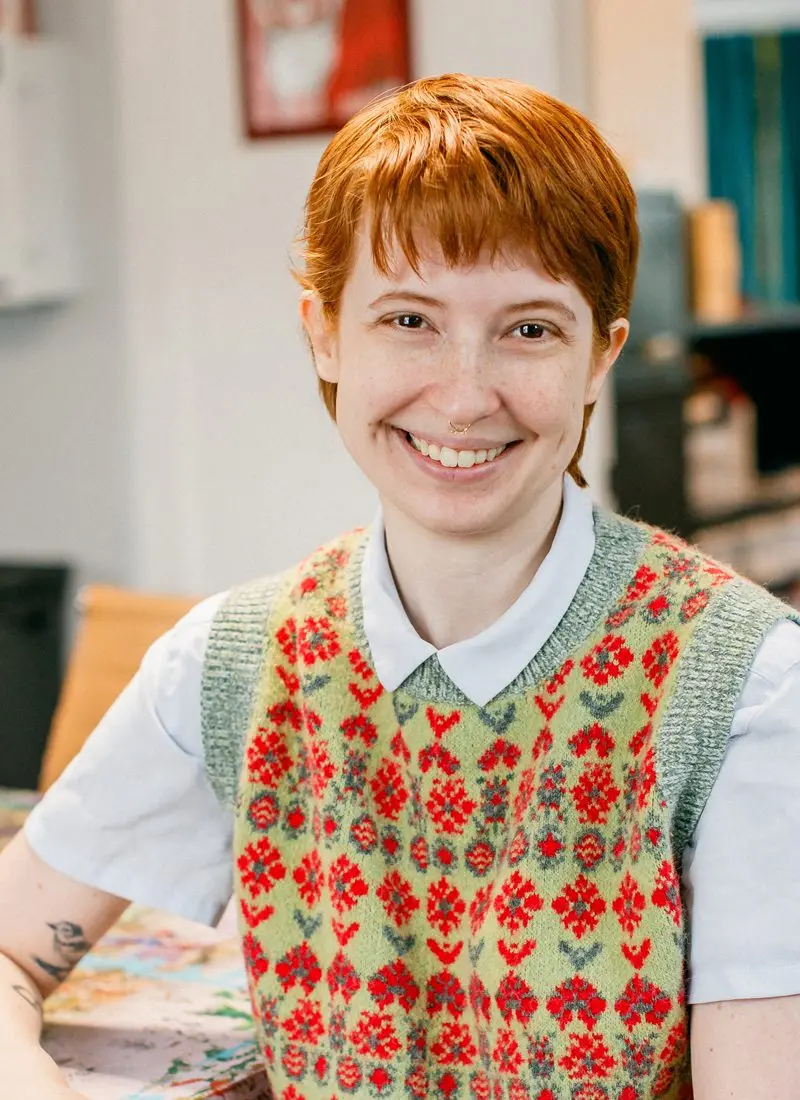
SYDNEY DLHOPOLSKY, LCAT-P

LYRAH WALLACE, LCAT
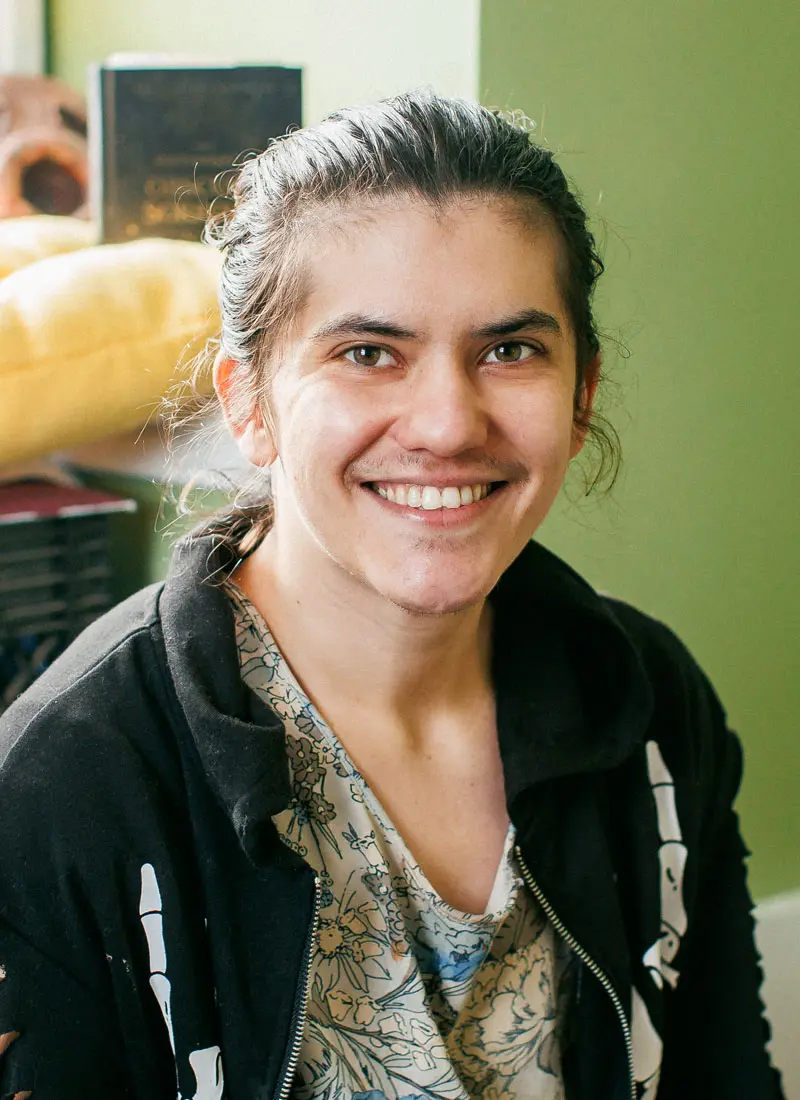
KIT SHULMAN, LCAT
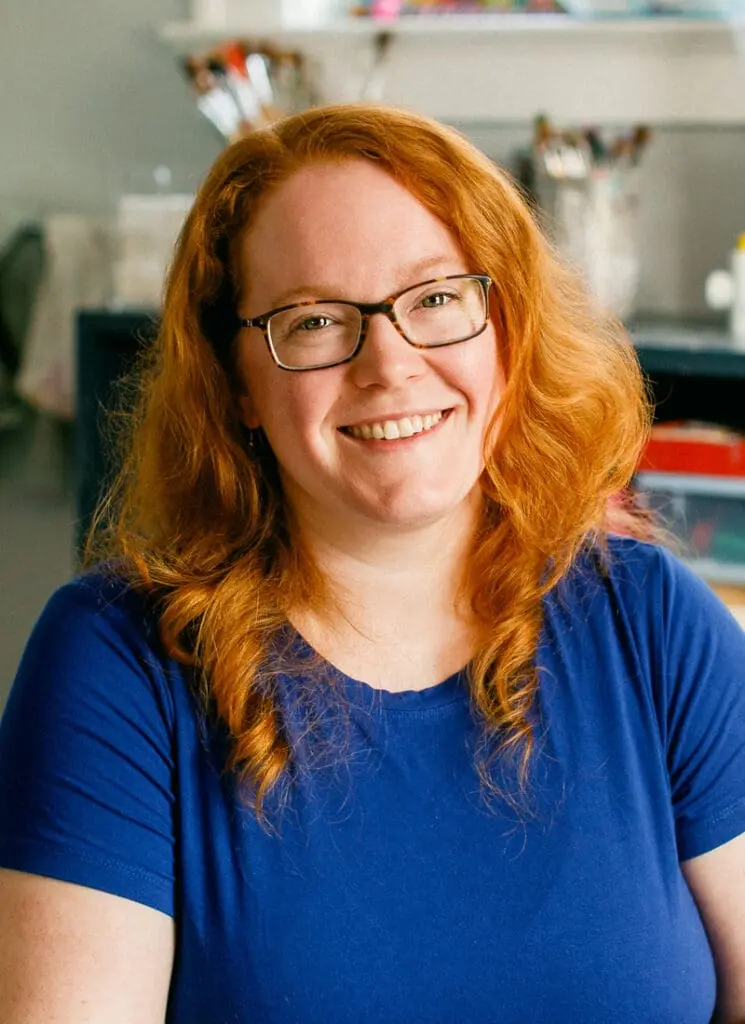
SARAH MAYNARD, LCAT
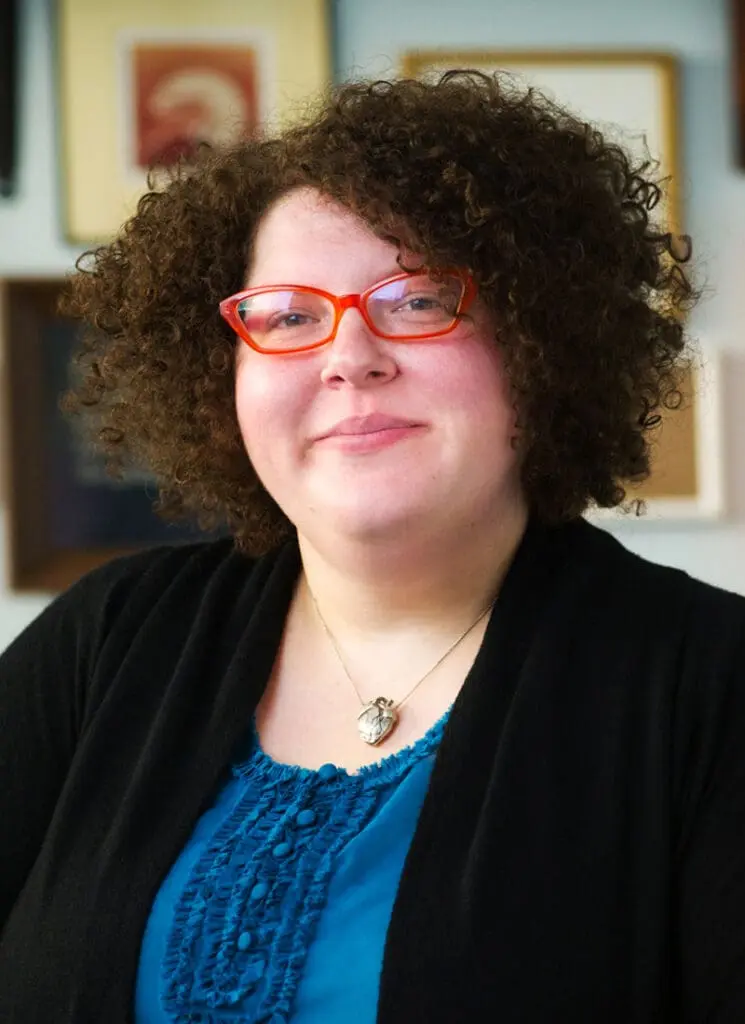
SARAH BEREN, LCAT
How a Complex Trauma Therapist Creates Safety in the Studio
A complex trauma therapist helps you understand why your body may still react as if the past is happening right now. That does not mean therapy is about forcing you to relive everything. Real trauma work starts with safety, consent, trust, and choice.
Here, safety is built carefully and is the foundation of our client’s experience with us. Your therapist may begin with what is happening in your life now, like the family text that wrecks your day, the shutdown after work, the panic before an appointment, or the exhaustion that comes from years of masking.
SAMHSA describes trauma-informed care as emphasizing safety, trust, collaboration, empowerment, and support for resilience. That fits how our complex trauma therapists approach the work. You will not be pushed to disclose more than your system can hold. You get to slow down. You get to say no. You get to make choices.
LGBTQIA+ Affirming Trauma Support for children through all ages of Adulthood
For LGBTQIA+ clients, safety means more than being tolerated. It means being understood without having to teach a 101 lesson before the real work can begin. Your complex trauma therapist can hold space for family rejection, coming out, gender exploration, dysphoria, chosen family, identity-based harm, relationship trauma, and the exhaustion of living in systems that keep asking you to defend who you are.
In the studio, your pronouns, relationships, identity, body, and story are treated with respect. You do not have to make your trauma sound more "acceptable" or your identity easier for someone else to understand.
You do not have to justify your chosen family, prove why certain relationships feel complicated, or make yourself smaller to be easier to support. Many of our therapists are part of the LGBTQIA+ community, which infuses their work with a great amount of empathy and understanding.
A Neurodivergent-Affirming Mental Health Care Approach for all ages
For neurodivergent clients, safety means therapy that works with your brain instead of against it. If you are autistic, ADHD, OCD, late diagnosed, self-diagnosed, or still figuring things out, your therapist will not treat masking, sensory overwhelm, shutdowns, stimming, burnout, or executive functioning struggles as personal failures.
Your complex trauma therapist can help you notice what your nervous system needs, what environments drain you, and what supports actually fit your life. You do not have to make eye contact, sit still, explain your sensory needs perfectly, or pretend a coping skill works just because it sounds good on paper. You will not have to explain how your brain works or autistic burnout.
Your whole self is welcome here, not treated like extra paperwork. Safety also means being believed about your identity and lived experience.

Every hue of you is welcome.
Our complex trauma therapists are licensed art therapists who work with trauma through creativity, somatic and nervous system care, identity-affirming support, and real human connection. You can meet the team here and explore who feels like the best fit for your needs. Therapy is a relationship, and complex trauma often comes from relationships where trust was broken, conditional, confusing, or unsafe, so feeling respected by your therapist is part of the work. In your first few sessions, your complex trauma therapist may help you name what has been happening, notice nervous system patterns, move at a pace that feels safe enough, and decide whether you need grounding, boundaries, grief work, art making, or support saying the thing you have been holding for years.
Client-Centered Complex Trauma Therapy with Spotted Rabbit Creative Arts Therapy
When you are choosing a complex trauma therapist, you deserve more than a nice person with a worksheet. You deserve care that understands how trauma lives in the body, how identity and oppression affect safety, and how healing often needs more than words. Here, complex trauma therapy is creative, sensory, affirming, and deeply human.
Art Therapy for Trauma When Words Are Not Enough
Art therapy for trauma is one of our core specialties. The American Art Therapy Association describes art therapy as a mental health profession that uses active art making, the creative process, psychological theory, and human experience within a psychotherapeutic relationship.
Here in the studio, art therapy for trauma might look like drawing the shape of a feeling, using collage to show a relationship pattern, working with clay when your body needs pressure and texture, or creating a visual map of the parts of you that protect, please, freeze, rage, hide, or keep going. You do not need to be an artist, and your therapist will not tell you what your art "really" means. We get curious with you, slowly and gently, so what has been looping inside your body has somewhere safer to land.
Art therapy for trauma can also make room for texture, movement, image, and metaphor when direct storytelling feels too much. You can stay connected to the present while giving painful material a form outside your body.
A Studio Space That Helps Therapy Feel Less Like Therapy
Our studio spaces are built for creative, sensory, human therapy. There are art materials within reach, room for experimentation, and permission to process in ways that do not require constant eye contact or perfect words.
For many clients, the studio itself helps therapy feel less intimidating. You can sit at a table. You can make something with your hands. You can talk while looking at a paper instead of directly at your therapist. You can pause, choose a color, rip paper, smooth clay, or let your nervous system have something concrete to focus on while harder feelings move through.
Affirming Trauma Support for Your Whole Self
Spotted Rabbit Creative Arts Therapy is a group of licensed art therapists specializing in LGBTQIA+ issues, gender affirming care, autism, ADHD, and complex trauma. Our practice is not just "LGBTQ friendly" or "neurodivergent aware" in a checkbox way. We center queer, trans, nonbinary, gender expansive, autistic, ADHD, chronically ill, disabled, and otherwise beautifully complicated folx.
That means your complex trauma therapist will not treat your identity as the problem. Your masking, burnout, dysphoria, sensory overwhelm, family estrangement, rejection sensitivity, shutdowns, and relationship fear are explored with context. Complex trauma therapy here can be deep and practical, soft and direct, structured and flexible. You are allowed to want more than survival. You are allowed to want a life that feels like it belongs to you.
How to Get Started with Art Therapy for Trauma
Starting therapy for complex trauma can bring up a lot before the first session even happens. You might feel hopeful, suspicious, embarrassed, scared, relieved, or annoyed that you have to explain everything again. All of that is welcome. Here is what getting started with art therapy for trauma can look like at Spotted Rabbit Creative Arts Therapy.
Reach out when You are Ready
Early sessions usually focus on getting to know you, what feels hard right now, what has helped before, what has not helped, and what you want life to feel like. You can share what feels relevant or simply say, "I am not ready to talk about that yet."
Start by contacting us or calling/texting 585-430-9877. You do not need the perfect words, a formal diagnosis, or a fully organized trauma history. "I think I need support" is enough.
Get matched with a therapist who fits
We will help connect you with a complex trauma therapist based on your needs, goals, identity, age, preferences, and current availability. Sessions may take place at our Monroe Avenue studio in Brighton, our Pittsford studio near Bushnell's Basin, our upcoming studio in Henrietta, or through telehealth anywhere in New York State when appropriate. If you searched for "complex trauma therapy near me," we can help you understand which studio location or telehealth option may fit.
Begin with safety, not the whole story
Early sessions usually focus on getting to know you, what feels hard right now, what has helped before, what has not helped, and what you want life to feel like. You can share what feels relevant or simply say, "I am not ready to talk about that yet."
Therapy for complex trauma is not about rushing into the hardest memories. It is about building enough trust, grounding, and choice that healing becomes possible without overwhelming your system.
In individual art therapy, art is always an invitation, not a test. You may talk the whole session, make art the whole session, or move back and forth. The point is not performance. The point is helping your nervous system, feelings, and story find a safer way to be seen.

Find a Complex Trauma Therapist Who Fits
With no waitlist, we're currently welcoming new clients for in-person sessions in the Rochester area or online sessions throughout New York State. We have studios in Brighton, Pittsford, and Henrietta, making your journey to healing closer to home. Many of our art therapists are in-network with most MVP plans and are accepting new clients!
We are also a fully stocked mixed-media art studio offering unique, creative classes. Every hue of you is welcome.
“Going to therapy at Spotted Rabbit Studio isn’t just good for my mental well-being; it has improved every aspect of my life. For the first time, after years of trying different therapists with different specializations and philosophies, I finally feel as though therapy is helping me unravel a lifetime of trauma and grief.” - SRS client
FAQs About Trauma Therapy
COMMON QUESTIONS WE HEAR
What if I Am Not Ready to Talk About Specific Memories?
That is okay. Replaying every memory isn’t required to heal from trauma. Your therapist will help you work with what is showing up now, like body reactions, relationship patterns, shutdowns, anxiety, shame, or numbness. Rather than focusing on specific memories, we’ll focus on the underlying feelings in current experiences that link back to traumatic memories, like feeling helpless, unlovable or abandoned.
Can Art Therapy Sessions Still Include Talking?
Yes. Art therapy includes talking, art making, silence, reflection, grounding, or a mix of all of those. You and your therapist can decide what feels useful in each session.
Can I Choose Which Therapist I Work With?
You can explore the team at /team/ and share preferences when you reach out. Fit matters, especially when you are working with complex trauma.
Is Complex Trauma Therapy Only for Childhood Trauma?
No. Complex trauma can come from childhood experiences, adult relationships, identity-based harm, medical trauma, religious trauma, chronic stress, or repeated experiences where you did not feel safe, seen, or supported.