If you want therapy that feels like a soft chair and a paint table instead of a fluorescent-lit office, you are in the right place. Individual art therapy at Spotted Rabbit Creative Arts Therapy gives you one-on-one support in Rochester, where you can talk, make art, or move between both in a way that feels natural to your brain and your body. You get a queer and neurodivergent affirming space where you do not have to translate yourself, mask, or have the perfect words ready in order to be taken seriously.
Key Takeaways
Ready To Start Healing?
Connect with an LGBTQIA+ and neurodivergent affirming art therapist who actually gets your world. Book your first session today and give your nervous system a softer place to land.
What Individual Art Therapy Looks Like At Spotted Rabbit Creative Arts Therapy
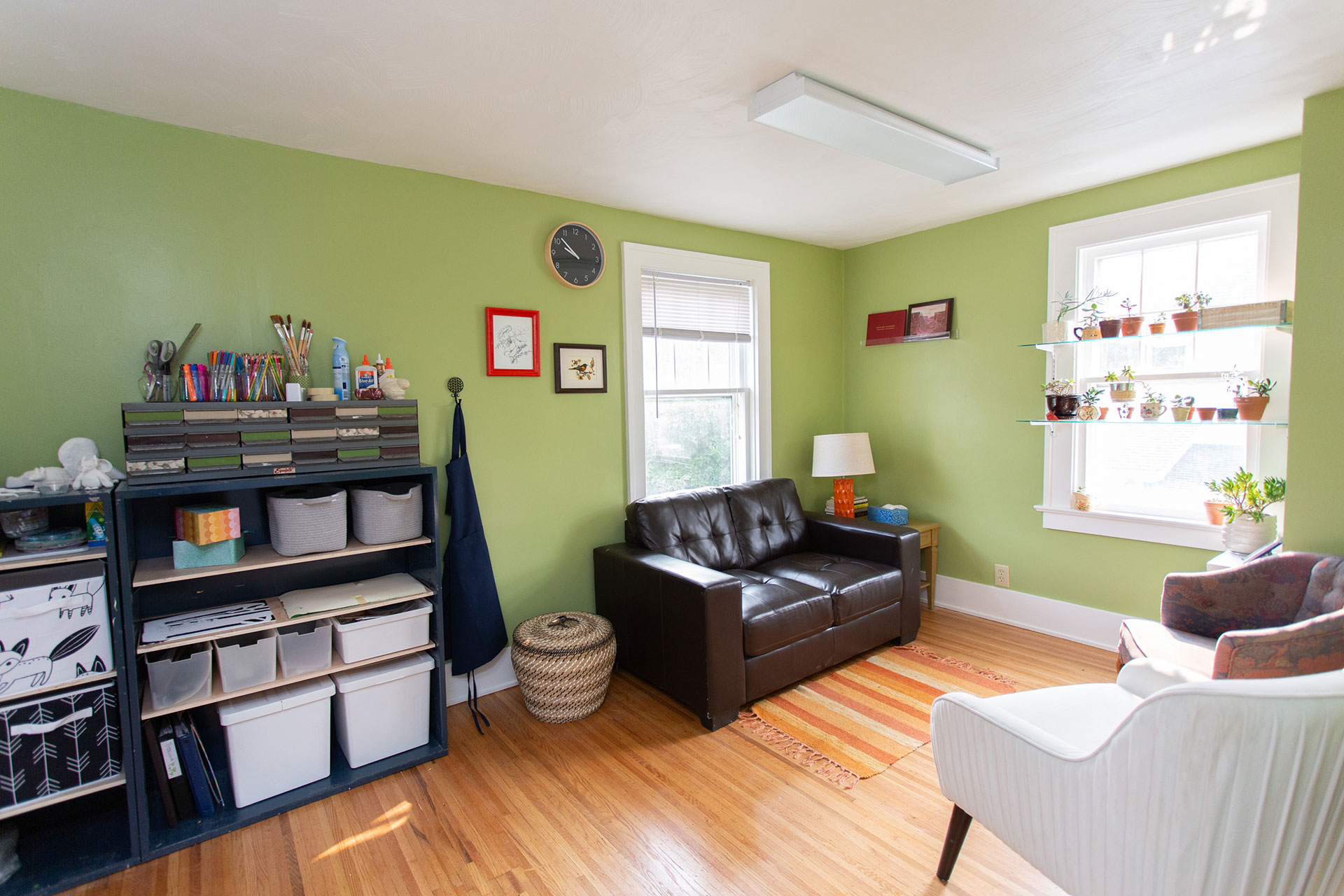
A Studio, Not A Clinic
Individual therapy here is simple at its core. You meet with a therapist one on one in a space that feels more like a creative studio than a clinic. Some days, you might spend most of the session talking. Other days you might reach for paint, clay, collage, or simple mark making while you sort through what is on your mind. Art is always an invitation, never a requirement, and there is no such thing as being “bad” at it.
Centering LGBTQIA+ And Neurodivergent Clients
We support LGBTQIA+ and neurodivergent people in Rochester who want therapy that already understands their world. Many people come to us feeling worn out from talk therapy that felt cold, judging, or focused on checklists instead of what their life is really like. Here, your therapist cares about what you say and also how your story shows up in your body and day to day life.
In Person In Rochester And Online Across New York
You can meet with an individual therapist in cozy studio spaces in the Brighton and Pittsford areas of Rochester, or join sessions through secure telehealth anywhere in New York State. Either way, you get a space where art and words work together to help your nervous system exhale.
Why Choose Individual Art Therapy Instead Of Traditional Talk Therapy?
If you have tried traditional talk therapy in Rochester and walked away feeling unseen or stuck, individual art therapy can offer a different way in. Talk only therapy leans heavily on language, which can feel impossible when your nervous system is flooded, shut down, or so practiced at masking that you are not sure what you really feel. Art therapy welcomes both verbal and nonverbal processing, so you have more than one route to your own truth.

When Words Are Not Enough
In individual art therapy, your therapist might invite you to map out a memory in color, build a scene that shows how your anxiety feels, or create an image of what safety looks like. You do not have to explain everything in polished sentences while it is happening. As you create, your body has a chance to slow down, your breathing can deepen, and your nervous system can begin to find a different rhythm. Many people notice that once their hands are busy, words start to come more easily too.
Safer Processing For Trauma Survivors
Research on art therapy has found it to be a low risk, high benefit approach for people living with serious mental health concerns. For trauma survivors, sitting face to face and talking the entire time can feel intense or exposing. Working side by side at a table with art supplies available can feel safer and more grounded while you still receive professional support.
Art And Talk Working Together
Individual art therapy at The Spotted Rabbit combines clinical skill with creative tools so you can process what happened to you, not just talk around it. You get room for silence, image, movement, and metaphor, along with careful reflection when you feel ready.
What To Expect With Individual Art Therapy At Spotted Rabbit Creative Arts Therapy
No two sessions look exactly the same, because no two people are the same. At the start of individual therapy, you and your therapist talk about what brings you in, what has and has not helped in past therapy, and what you hope might feel even a little different six months from now. Together, you decide how much art you want to use, what materials feel most approachable, and what kind of pace feels respectful of your limits.
Some sessions focus mostly on talking through something that happened in your week while you hold a pencil or knead clay in your hands. Other sessions might revolve around a specific art process such as collage, painting, or drawing a timeline of your story. Your therapist will help you notice sensations, emotions, and patterns that show up in the art and in your body, then reflect with you in language that feels accessible.
Sessions are collaborative from start to finish. Your therapist is not there to lecture, interpret your art without your input, or push you into places that do not feel safe. You have full permission to say no, to pause, or to choose different materials at any point.
- Complex trauma and PTSD
- Anxiety and panic
- Depression and numbness
- Burnout and chronic stress
- Chronic illness and disability
- Identity exploration and life transitions
- Relationship and family patterns that feel stuck
Individual Therapy For LGBTQIA+ Folx Who Are Tired Of Explaining Themselves
If you are queer or trans, you may have had the experience of walking into therapy and realizing you are spending more time explaining your identity than actually receiving support. You might have felt judged, tokenized, or told that your identity was the root of your problems. Individual therapy at Spotted Rabbit Creative Arts Therapy is designed so you do not have to carry that burden.
A Space Where Your Identity Is Not The Problem
Many of the therapists here are part of the LGBTQIA+ community themselves. That shared lived experience can mean you spend less time proving that your identity is real and more time exploring what you want your life to look like. Your therapist understands that queer and trans joy, community, and culture matter just as much as the pain you have lived through.
Themes That Often Show Up In Sessions
Sessions might include making art about gender euphoria, coming out journeys, family tension, religious trauma, body image, dating and relationships, or community grief. You might create symbols for your name or pronouns, explore colors and shapes that feel like home in your body, or tell the story of your identity through visual scenes. Art can hold the parts of your story that are too large or complicated for straightforward explanation.
Meet Queer And Trans Affirming Therapists
Identity is never treated as the problem here. Instead, therapy focuses on the impact of oppression, trauma, and survival strategies, while honoring your resilience and wisdom. You are not asked to separate your struggles from the systems that harm you. Together, we work toward healing that makes more room for your full, authentic self.
Individual Therapy For Neurodivergent Brains That Are Done Masking
If you have autism, ADHD, OCD, or are otherwise neurodivergent, you may have learned to shape shift to survive. You might be excellent at masking, keeping it together at work or school, then crashing in private. You might feel “too much” or “too sensitive,” or worry that you are always behind some invisible timeline. Individual art therapy at Spotted Rabbit Creative Arts Therapy offers a space where your brain is not a problem to fix.
Sensory Friendly, Brain Friendly Therapy
Sessions can be adapted to meet your sensory needs and communication style. You do not have to sit still, maintain eye contact, or speak in full sentences to be welcome here. You can stim, fidget, move around the room, use scripts, draw while you talk, or type something out first if speaking is hard. Your therapist will check in about lighting, sound, texture, and pace so the space supports your nervous system instead of overwhelming it.
Using Art To Understand Burnout And Overwhelm
Art therapy can be especially supportive if you experience sensory overwhelm, shutdowns, meltdowns, and executive functioning struggles. Making art can give structure to your thoughts and a concrete way to see patterns and strengths that might be hard to notice on your own. Together, you and your therapist might explore what burnout looks like in your life, build visual tools for planning and pacing, or create art that honors both your needs and your values.
Building A Life That Fits You
The goal is not to teach you how to mask better. The focus is on building a life that works with your brain and body, not against them. Your therapist will help you explore what feels meaningful and sustainable so that your life is shaped around your values rather than constant survival mode.
What To Expect In Your First Individual Therapy Session
Taking the first step toward therapy can feel intimidating, especially if you have had mixed experiences before. At Spotted Rabbit Creative Arts Therapy, the process is designed to be as gentle and clear as possible.
In your first individual session, you will spend time getting to know each other. Your therapist may ask about what feels hardest right now, what you hope might feel different, and what your life looks like day to day. You are always in control of how much you share. There is space for “I am not ready to talk about that yet” and “I am not sure how to put this into words.”
You will also talk together about your relationship with art, your sensory needs, and any access needs you have. If you want, you might begin with a very simple art process, or you might choose to stick with conversation while you get comfortable. You will never be pushed to make art or to disclose more than feels safe. Over the next few sessions, you and your therapist will keep adjusting the pace and structure until it feels like the sessions fit you.
Call or text today to get started with individual art therapy in Rochester at 585-430-9877, or explore the Our Team page if you want to read more about our therapists before you reach out.

Is Individual Art Therapy A Good Fit For You?
Individual art therapy at Spotted Rabbit Creative Arts Therapy might be a good fit if you tend to shut down, go blank, or leave sessions feeling like you did not say what you meant to say in regular talk therapy. It can also help if you are queer or neurodivergent and want a therapist who understands your identity without a long explanation, or if you are living with complex trauma, chronic illness, or burnout and feel like you are always in survival mode. Many clients come because they want one space in their life where they can unmask and be fully themselves.
Worried You Are “Not An Artist”
Healing After Hard Therapy Experiences
If you have had a bad experience with therapy before, that makes sense. You are allowed to be cautious. You can talk about what did not feel good in the past so that your therapist knows what to avoid and what to do differently. Therapy here is collaborative, consent based, and responsive to your feedback. You get to decide what healing looks like for you.
Begin One On One Art Therapy In Rochester At Your Own Pace
You deserve individual therapy that honors your story, your identities, and the way your brain works. At Spotted Rabbit Creative Arts Therapy, one on one art therapy gives you a creative, trauma informed, and radically affirming space to untangle what you are carrying. Whether you are LGBTQIA+, neurodivergent, living with complex trauma, or simply exhausted from surviving on your own, you do not have to have the right words or a clear diagnosis to reach out.
No Waitlist, Real Options
Reach Out When You Are Ready
Call or text The Spotted Rabbit at 585-430-9877, or reach out through the Contact Us page. You can take the next step at your own pace, and you will not have to do it alone.