
Licensed art therapist & Internship coordinator
Kit Shulman, LCAT (he/him)
- Dissociative Disorders
- Complex Trauma
- Non-Suicidal Self-Injury
- Neurodivergence
- LGBTQIA+ Issues
- Issues Related to Divorce
- Self-Compassion
Brighton location
Limited openings available. Please contact!
$125 self-pay rate
In-network with MVP
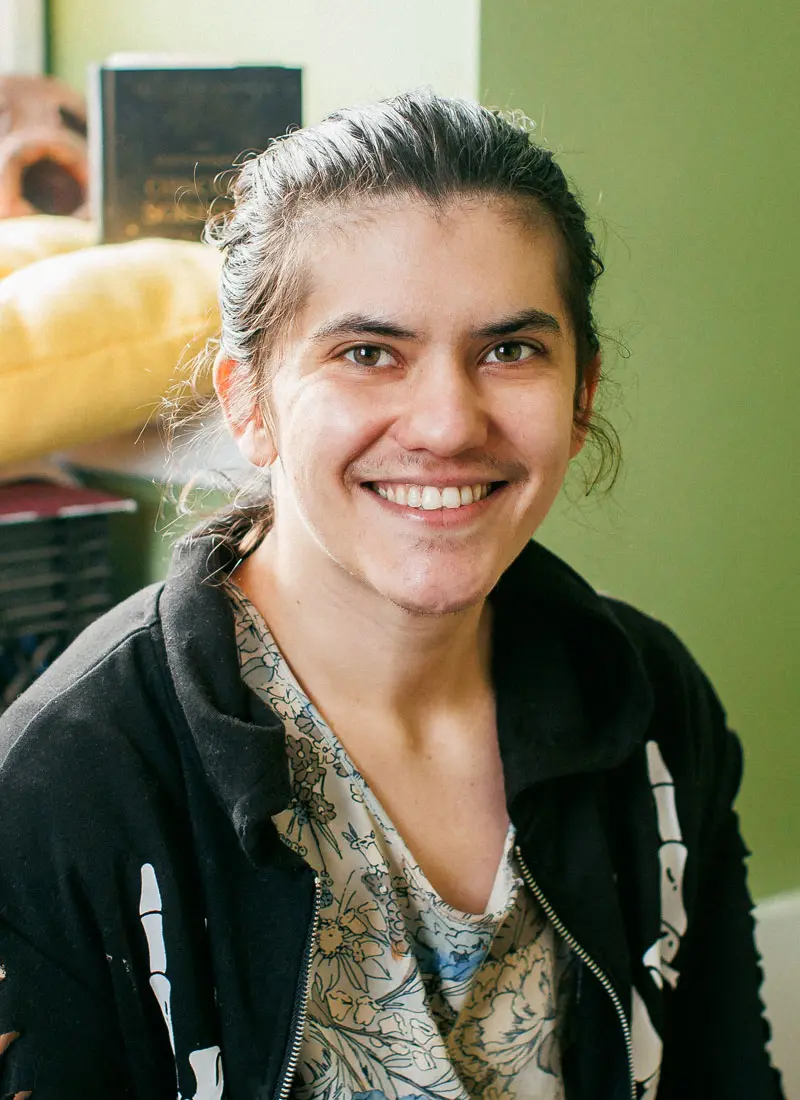
Who we are is molded by each and every moment we experience in life. That’s why we are not who we were 10 years ago, or even 10 days ago. What we learn and see in childhood tends to shape our understanding of the world and the self most strongly. This leads to how we take action, think, and interact/react to life around us. Trauma happens at any time and in any place. It happens from big events and from small events. It happens when others say it didn’t. It sometimes even happens without you realizing it. The fact is, if you are struggling with difficult feelings, repetitive thoughts, and overall stress or depression, what you are feeling is real. Labels can be stifling and are too often forced upon us. My goal is to validate and understand your thoughts and experience, however you define it.
Through art and conversation, I will attempt to help you understand what in life is making you unhappy, and what can be done to change it. I approach therapy through an ACT-based lens in which we define what YOUR values are and the life that YOU want (as opposed to what others might tell you they should be). I often take a spiritual, Jungian approach as oracle cards, star signs, tarot (and more!) can be very helpful tools in understanding your own mental health. In addition to trauma, I specialize in working with queer young adults, have experience and interest working with dissociative identity disorder (DID), and I am working more each day to acquire skills to better serve the community.
Wondering why dissociation happens or what it might be trying to tell you? Read Why Am I Dissociating? to explore Kit's research on the role dissociation plays in protecting us and how therapy can help you reconnect with yourself.
“The way we communicate with others and with ourselves ultimately determines the quality of our lives.”
R. Robbins
Get To Know Kit!
Education & Training
I earned a BFA from RIT and an MS in Creative Arts therapy from Nazareth College. I'm licensed as a creative arts therapist in NYS and have been practicing arts-based psychotherapy since 2020.
Currently, I am completing an extensive training by Janina Fisher to become a Certified Clinical Trauma Professional (CCPT). This includes the use of somatic practices with clients. I've additionally completed several Internal Family Systems (IFS) workshops.
client focus
I tend to work with young adults who are in the "figuring things out" phase of their lives. Many are queer, have creative professions or hobbies, and are figuring out how to balance what actually matters to them vs the things they "have" to do. Many of my clients have difficult relationships with family, and are developing found family with friends and/or their polycule.
Clients may range from "I feel like I'm struggling every day; I *really* need to get a better hold on my mental health," to "Well, I'm functional enough, but why am I not happy?" I enjoy working with clients at whatever stage they are at; there is no right or wrong time to pursue therapy!
I also find myself working with millennial and Gen X adults who feel stuck in life, relationships, and their creative practices.
Therapeutic approaches
Acceptance and Commitment Therapy (ACT) is at the core of how I practice therapy. This approach works to identify the true values and related goals of each client, not what some dead white guy says they "should" be. It also focuses on how to take action toward these values, or accept the limitations if that's not possible.
I also strongly enjoy working from a parts perspective, which can be helpful regardless of whether or not a trauma or dissociative disorder is present. I also find myself incorporating tarot and oracle cards for those who might be interested in taking a new perspective on everything happening in their life.
areas of specialization
I specialize in complex trauma and dissociative disorders. I also commonly work with gender dysphoria and queer-related issues. Anxiety and depression are often linked to all of these, which I can also help clients work through.
What does a session with you look like?
I take a loosely structured approach to therapy sessions. I'll always provide an art promp and clients can choose to work on this topic or something else entirely. Many clients have preferred materials and ways of creating, and I will use this information to create prompts that feel comfortable, but that also encourage you to develop your own ideas.
With the talk aspect of it all, I tend to follow my client's lead in exploring what has been coming up this week. I find it's helpful if clients have a general idea of what they might want to talk about, whether that's events from the week or topics they've been hoping to unpack, but I am happy to provide more guidance if needed. Once we've worked together for some time, I'll be able to ask more directed questions to help get to the deeper trauma work or for those days that you "just don't know what to talk about."
How do I know if we're a good fit?
I think that immediate signs of being a good fit include feeling comfortable and not overly pathologized in session. I hope to help clients come to accept their symptoms as just part of how they function, rather than seeing them as a defect. Learning to accommodate yourself without shame is of the utmost importance in my point of view.
Thinking about yourself anof d/or the world in a less negative light is another progress point you may see a couple of months down the line. Not necessarily "everything is great!!" because hey, it might not be, but rather not being stuck in the belief that nothing can be changed.
Things like improved emotional regulation, consistent integration of coping skills, and seeing shifts in behavior take longer. It is easy in theory to do the healthy thing that you're "supposed" to do, but overcoming that emotional hurdle is another thing, and honestly, that's what therapy is really addressing