
LGBTQIA+ Gender - Transgender- and Gender-Nonconforming Therapy
Spotted Rabbit StudioLIVE MORE AUTHENTICALLY
Gender-Affirming Therapy in Rochester, NY
do you...
• Need an accepting space to explore your gender?
• Want support as you come out to friends and family?
• Feel like you are ready to transition and aren't sure where to start, or would like some guidance?
• Have fears about discrimination, safety, and politics?
• Worry about what others think about you?
• Desire more queer community?
• Want to live more authentically with family, friends, and society?
You deserve therapy where your gender is respected from the first moment, not questioned, tested, or treated like a debate. Gender-affirming therapy is mental health care that supports your well-being while honoring your identity as real, whole, and worth protecting.
It's our mission here at Spotted Rabbit Creative Studio to serve transgender, nonbinary, and gender nonconforming folx in Rochester, NY, and nearby with therapy that feels steady, inclusive, and human. Here, affirming care guides everything we do from the basics, like consistently honoring your name and pronouns, to the deeper work, like making room for the ways trauma, relationships, family systems, neurodivergence, and safety intersect in your daily life.
Therapy should feel like relief. It should feel like you can show up as yourself without bracing for a rigid structure that you have to fit into somehow. Here, care is founded on the knowledge that you are the expert on your identity.
Our team of therapists brings not only education and training. Many are part of the LGBTQIA+ community, bringing lived experience. You can relax knowing you will be understood on a deep level.
Here, you do not have to prove your gender or translate yourself
With us, you do not have to prove your gender. You do not have to be 'certain enough'. You do not have to follow a specific timeline or take specific steps to deserve care. Our counselors have shared experience as part of the queer community and can help give you the tools to thrive. From the first moment, your name and pronouns are respected, and your identity is not questioned, tested, or treated as ‘other’.
Extra stress is often a response to the world around you
Mental Health America notes consistent misgendering has been linked to PTSD, along with other mental health struggles.
Gender-affirming art therapy supports your autonomy
Here, your identity and unique journey are honored and understood by our gender affirming therapists. Your safety and healing are our top priority.
You can choose art therapy, talk therapy, or both
In our studio space, you can choose to talk, create, or a mix of both. We understand your needs change from day to day, and our session structure is purposely flexible.
TGNC youth face real mental health impacts from stigma and discrimination
U of L Health highlights high rates of anxiety and depression symptoms among TGNC youth. Art therapy can help with confidence, self-trust, and coping skills to thrive.

Every hue of you is welcome.
Get started with child or teenage art therapy today, in person in Brighton, Pittsford, and Henrietta, plus online therapy anywhere in New York State.
Spotted Rabbit Studio is expanding our practice and welcoming new therapists to our care team. We believe therapy should feel human, collaborative, and accessible...a space where healing and self-expression can coexist.
Trans- and Gender- Nonconforming Folx Often Carry Extra Stress
If you are trans, nonbinary, or gender-nonconforming, stress does not only come from your inner world. It is the everyday effort of navigating spaces that may or may not respect you, the calculation of when to correct someone, and the quiet vigilance that can follow you into work, school, healthcare, and relationships. Stress is one of the most important factors to consider, as it can have severe impacts on your physical well-being and lower your body's immune system.
Art therapy offers another, more approachable way for stress management when traditional talk therapy is not working for you. Through creative processes, you can explore identity, sexuality, and relationship dynamics through painting, sketching, clay making, and more. This gives you a way to process big questions in a way that is not overly direct, helping you explore your identity and heal more holistically.
A lot of stress comes from the world around you. This is often described as minority stress. That pressure can be constant, even when nothing big is happening. It can be misgendering, dead-naming, discrimination, rejection, and safety vigilance. It can also include the emotional fatigue of being treated like you must educate others just to be treated with basic dignity.
Over time, chronic stress can show up as anxiety that never fully shuts off, depression that feels like heaviness or emptiness, shutdown, irritability, anger, numbness, trouble sleeping, overthinking, or burnout. Mental Health America has noted that misgendering communicates that someone’s identity is not valid, and that consistent misgendering has been linked to PTSD.
Here is the reframe that matters: the problem is not your identity. The problem is the ongoing pressure to survive other people’s expectations and systems that were not built with you in mind. Gender affirming therapy can help your nervous system settle so you can make choices that honor your hopes, dreams, and needs, instead of living with your guard up.
Gender-Affirming Art Therapy: What It Is... and What It Isn’t
Gender-affirming art therapy is supportive mental health care that validates your gender and protects your autonomy. It is therapy that makes room for your whole experience, including the ways gender intersects with anxiety, depression, trauma responses, relationships, family systems, neurodivergence, culture, and safety.
In practical terms, you are not treated like your identity is a symptom. Your counselor will work collaboratively with you to clarify your goals, strengthen self-trust, and support your well-being with a real-world context. The work is consent-forward, paced, and responsive to your nervous system.
Gender-affirming therapy is also defined by what it refuses to do. There is no conversion agenda here. There is no pressure to come out, transition, pick labels, or follow timelines. You are not asked to make your life smaller so someone else can be comfortable; we are here to support you in whatever way you need in this season of your life.
Therapy That Feels Different.
Start now, in-person or online.
What Gender-Affirming Therapy Looks Like Here
...hint: It's Therapy That Doesn't Try to "Fix" You.
At Spotted Rabbit Creative Arts Therapy, you get a gentler approach to mental health care in a space that feels more like a creative studio than a clinic. We understand that your environment affects your nervous system. When a space feels clinical, rushed, or overly sterile, it can be harder to settle into yourself. Our Rochester, Pittsford, and Henrietta locations are designed to feel approachable and grounding, like stepping into a colorful, cozy space that feels like home, where our gender identity therapists can support you in feeling safe and comfortable on your mental health journey.
You decide how we work together: art therapy, talk therapy, or a mix. Gender-affirming art therapy can help you slow down, soften the intensity of what you are holding, and express what is difficult to name. It can also be a direct path to regulation when your body is activated, and words are not available yet. You can use creativity in session as much or as little as you want. You can talk and verbally process your experiences as much or as little as you want. Each session here at the studio is guided by a high level of care and empathy, honoring what you need most in that moment.
Meet the Team
Gender-Affirming Specialists
Spotted Rabbit's Licensed Creative Arts Therapists share your lived experiences, so we don't just "get it"...we ARE it. You don't have to do it alone. Reach out to say hello, we'd love to hear from you.

CIERA LACOUNT, LCAT
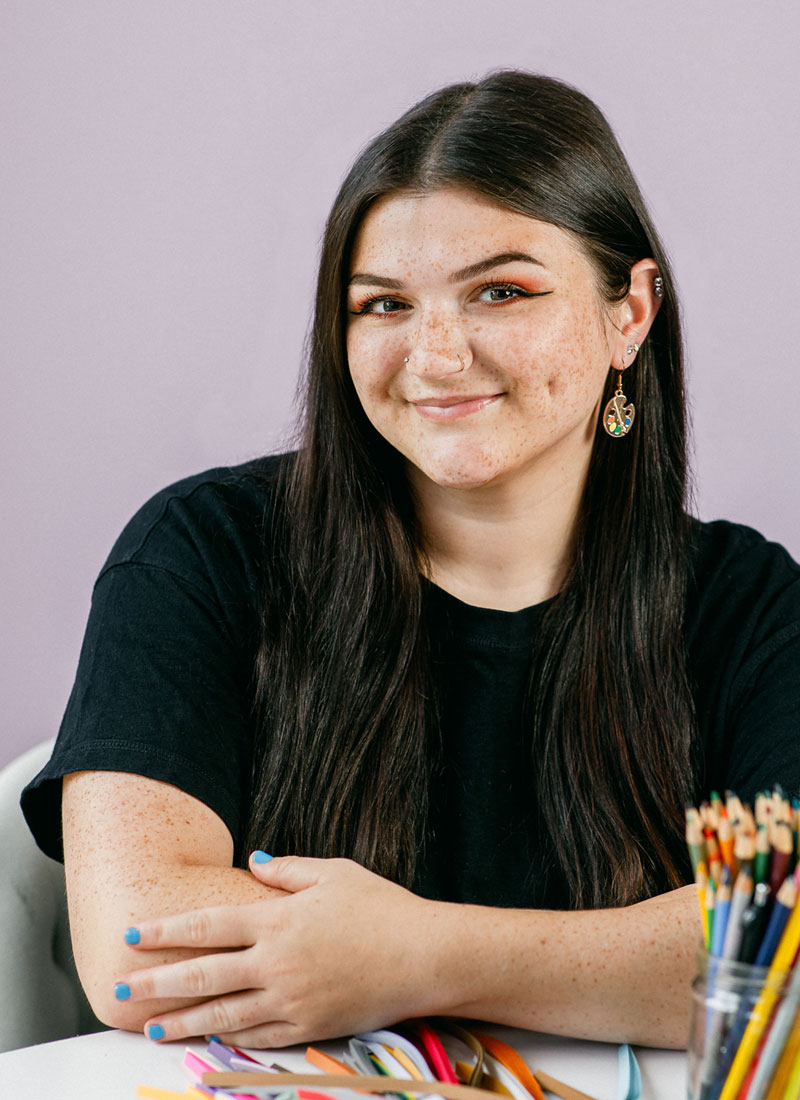
EMMA ANNABLE, LCAT-P

KYLE LANG, LCAT
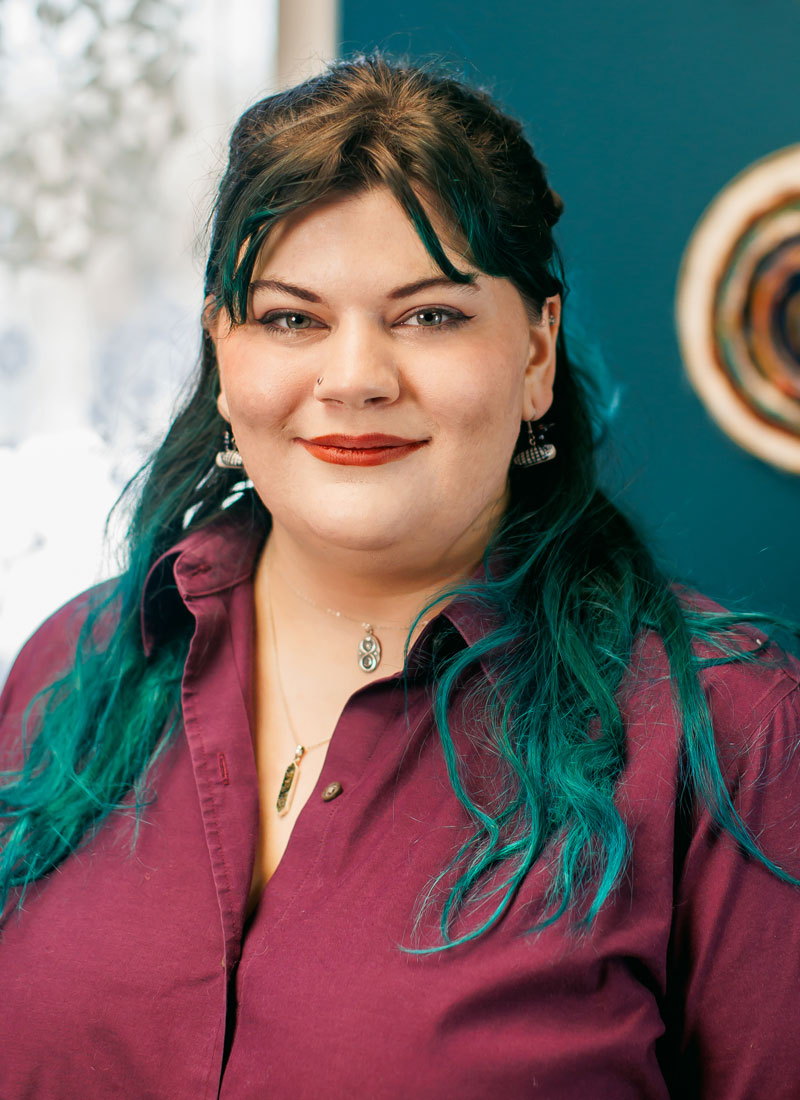
EVELYN VARLAN, LCAT-P
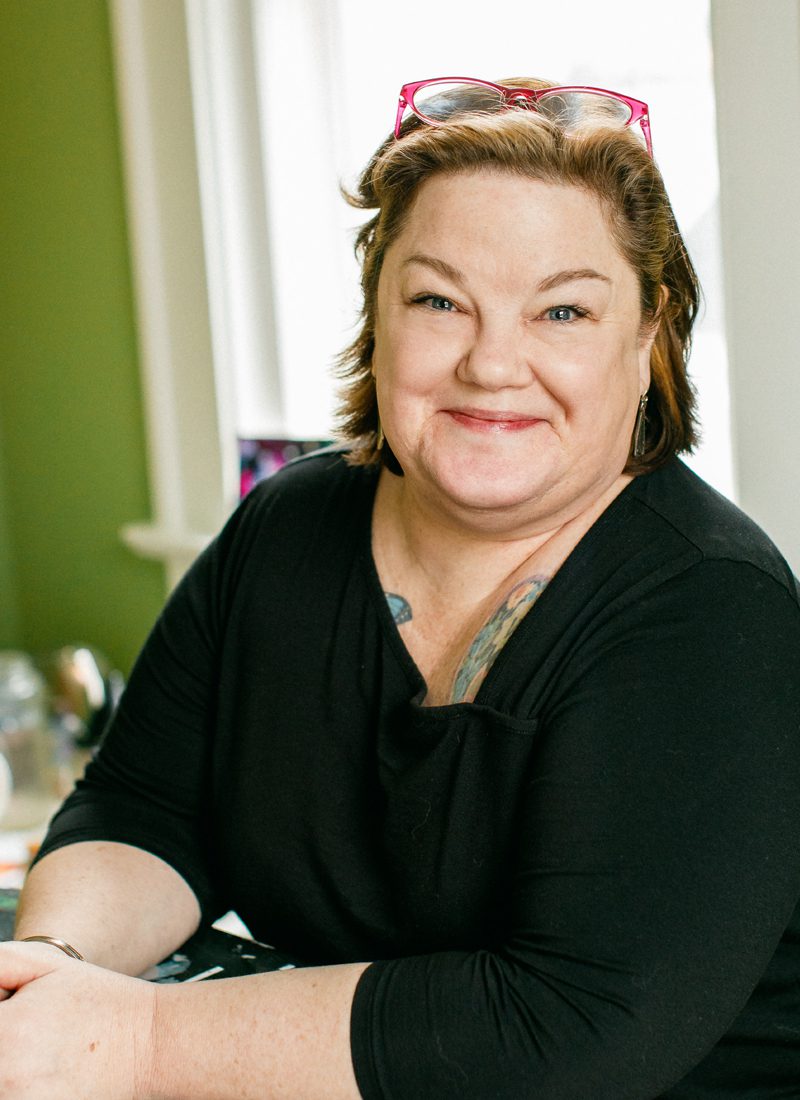
SHAWN SHANNON-MISSAL, LCAT
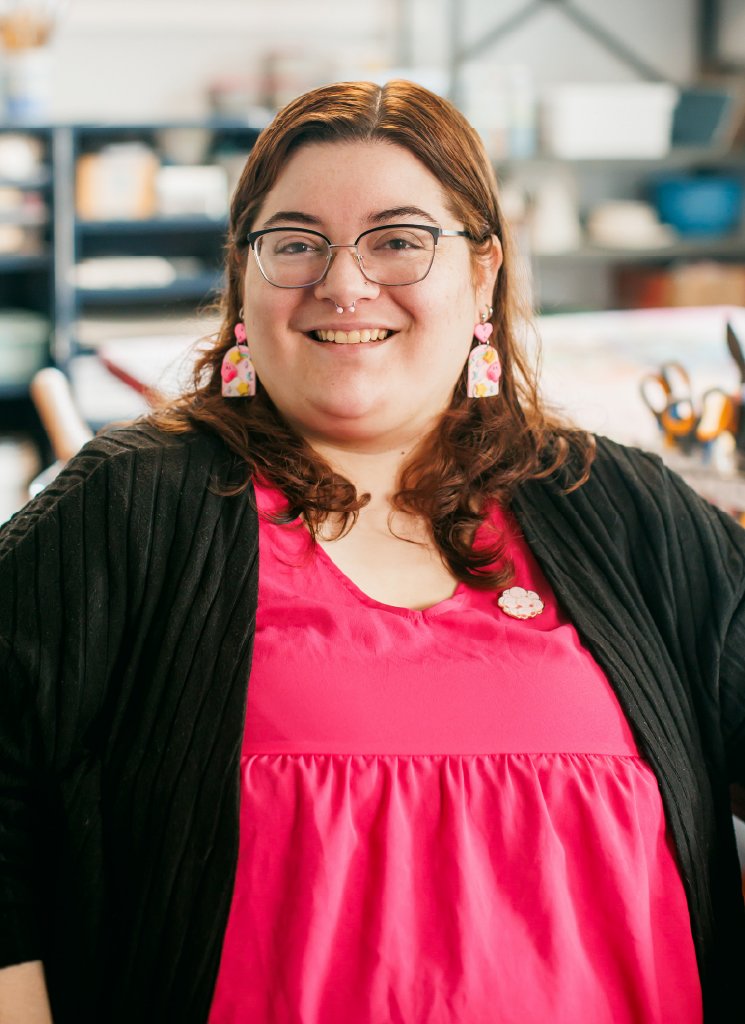
MARS REYNA, LCAT-P

KACY MADIGAN, LCAT

KAMYRN AARONSON, LCAT
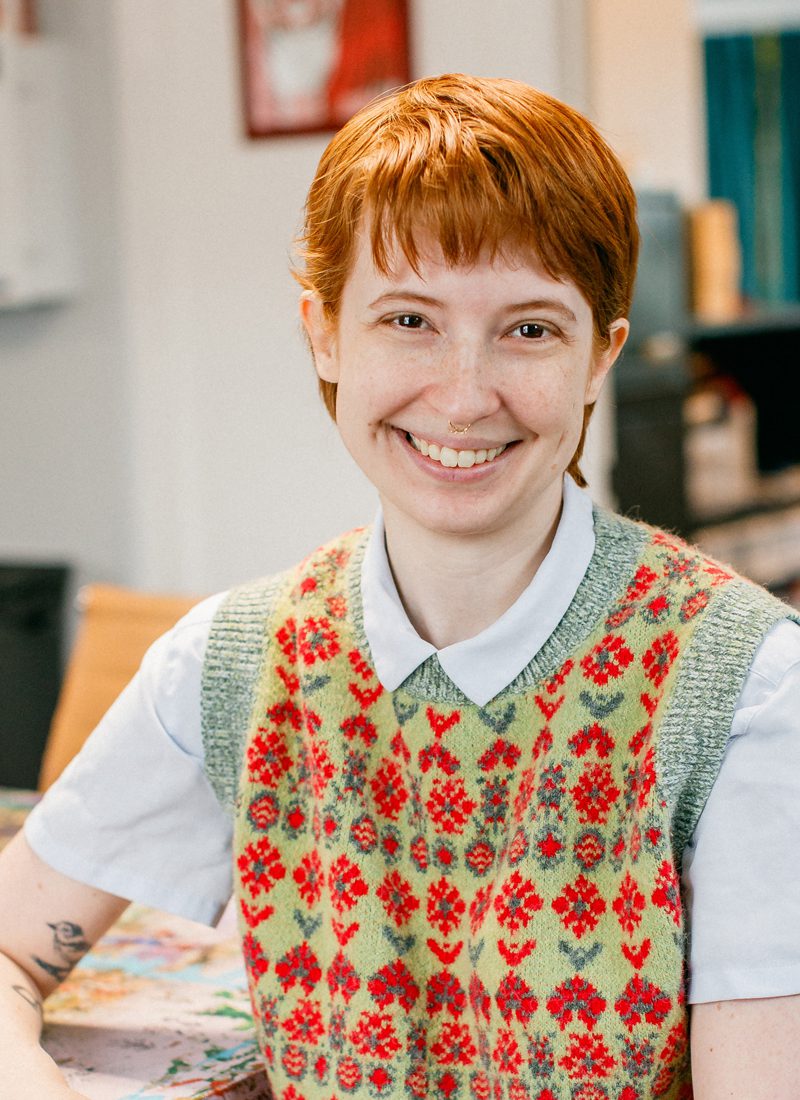
SYDNEY DLHOPOLSKY, LCAT-P

LYRAH WALLACE, LCAT
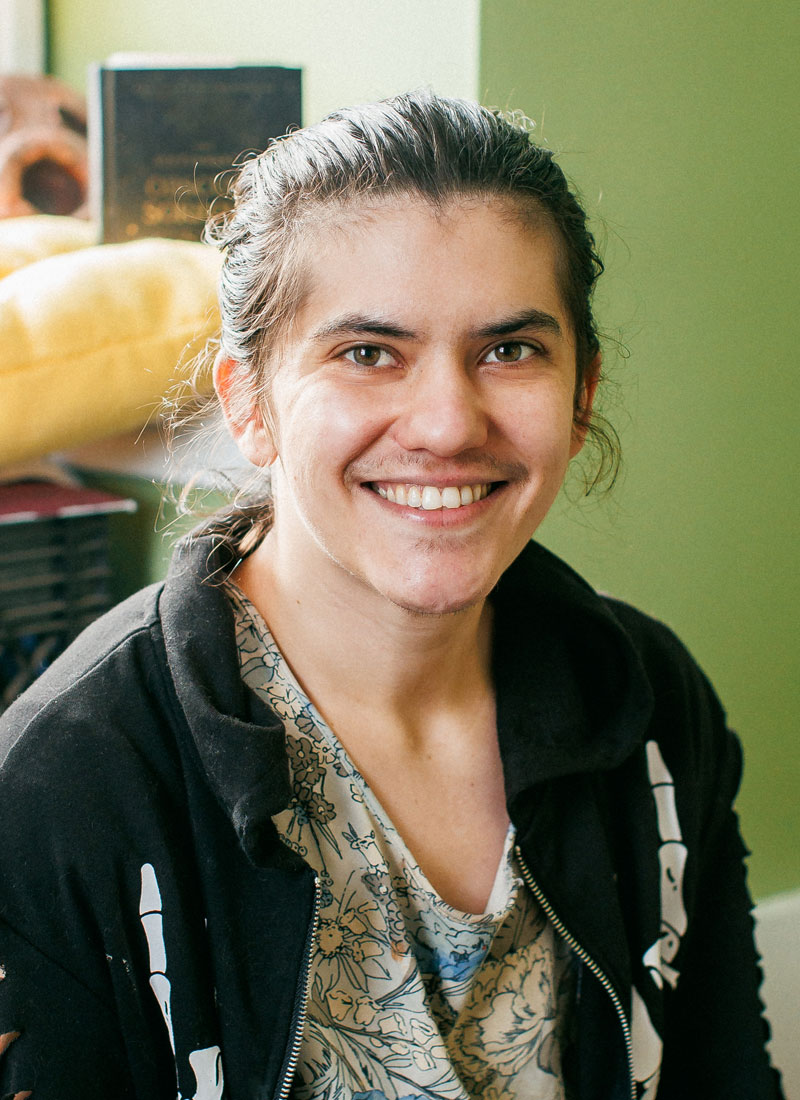
KIT SHULMAN, LCAT

SARAH MAYNARD, LCAT

SARAH BEREN, LCAT
Therapy That Doesn't Try to "Fix" You. Care is available now, in-person or online.
Transgender Therapy That Respects Your Identity From the Start
...Therapy Through Creativity.
Transgender therapy is mental health care that respects your gender identity as real, valid, and not up for debate. At Spotted Rabbit Creative Arts Therapy, we have worked hard to create an environment where care for transgender and non-binary folx consistently honors the full scope of who they are. Our gender-affirming therapists understand minority stress and recognize how gender can intersect with anxiety, depression, trauma, relationships, family dynamics, and safety.
Here, transgender therapy is collaborative and consent-forward. You are not asked to justify who you are, educate your therapist, or follow a specific path related to transition. Whether you are exploring your identity, navigating social or medical transition, processing misgendering or discrimination, or simply wanting to feel more confident in yourself day-to-day, transgender therapy offers space to regulate your nervous system, strengthen self-trust, and build support that fits your real world.
What You Can Work On in Session with a Gender-Identity Therapist
Sometimes you come in with one clear goal. Sometimes everything feels tangled together. Both are valid starting places. Our gender-affirming therapists can support you with the emotional weight of living in a world that does not always make room for you, while also helping you build the skills and inner steadiness that make your daily life feel more manageable. This can include identity exploration, values development, building community, stress and burnout support, relationship guidance, advocacy fatigue, and trauma-informed care for systemic oppression.
If you’re looking for a gender-affirming therapist, you might not be coming in with one neat problem. More often, it’s a mix of stress, identity development, relationship challenges, and the quiet exhaustion of moving through a world that does not always make room for you. These are some of the most common reasons people reach out for gender affirming therapy, and all of them are valid places to start.
You do not have to sort all of this out before you reach out. Gender-affirming art therapy can be the place where the tangle starts to loosen, where you feel understood without overexplaining, and where support is shaped around your real life. Whatever brings you in, it is enough.
Common Reasons People Seek a Gender-Affirming Therapist
• Navigating social and medical transitioning with guidance from someone who’s been there themself
• Support for anxiety, depression, stress, and burnout with real-world context
• Processing the impact of misgendering, rejection, harassment, bullying, or medical fatigue
• Strengthening boundaries and communication in relationships, family systems, dating, and intimacy for greater satisfaction in relationships
• Building self-trust and self-worth without pressure to be a certain version of yourself
• Practicing self-advocacy at work, school, healthcare settings, and in social spaces without burnout
• Trauma-informed support for survival patterns like hypervigilance, shame, shutdown, dissociation, and emotional numbness
• Finding steadier regulation in your body, including support for the nervous system and emotional pacing

The canvas is ready when you are.
Our gender-affirming therapists can support you with the emotional weight of living in a world that does not always make room for you, while also helping you build the skills and inner steadiness that make your daily life feel more manageable. This can include identity exploration, values development, building community, stress and burnout support, relationship guidance, advocacy fatigue, and trauma-informed care for systemic oppression.
Support for Trans- and Gender- Nonconforming Youth and Young Adults
Kids, teens, and young adults carry a lot already: school demands, social pressure, identity development, and the intensity of being seen. TGNC youth may also carry extra layers of stress related to safety, peers, family dynamics, and systems that do not consistently respect their identity.
UL Health has described that transgender and gender nonconforming youth experience high rates of mental health concerns largely due to stigmatization and discrimination. The purpose of naming this is not to pathologize identity. It is to validate that the environment can be heavy, and that TGNC and transgender therapy can help.
- TGNC YOUTH THAT REPORT SYMPTOMS OF ANXIETY AND DEPRESSION60%
- CISGENDER YOUTH THAT REPORT SYMPTOMS OF ANXIETY AND DEPRESSION28%
Helping Youth Feel Safer in Their Own Skin
Counseling for transgender youth and young adults can support emotional regulation, confidence, self-advocacy, and coping tools for navigating misgendering, bullying, and social pressure. It can also offer a place to practice boundaries, clarify values, and build a steadier sense of self that does not depend on other people getting it right.
When Caregiver Support Helps
When caregiver involvement is helpful, it can be included in a way that centers the young person’s dignity, voice, and emotional safety. That might mean caregiver sessions focused on support skills, communication, and creating a home environment that reduces stress. TGNC and transgender therapy with us are shaped to the person, not a checklist.
A Place Where You Do Not Have to Translate Yourself
If you have ever left therapy feeling like you had to teach your therapist the basics just to be treated with respect, it makes sense that reaching out again can feel risky. Spotted Rabbit Creative Arts Therapy exists to take that burden off your shoulders. Our mission is to serve transgender, nonbinary, and gender nonconforming folx with affirming, trauma-informed care that feels steady, creative, and fully human.
Spotted Rabbit is a creative arts therapy studio, not a clinic that also offers art therapy. Art therapy is a core specialty here, and it is one of the ways we help TGNC clients access safety, self-trust, and relief, especially when words feel tight, guarded, or exhausted. You are not asked to justify your identity or translate your experience so it is understood. You get support from therapists who understand the bigger picture of TGNC stress, and who know how to use both conversation and creativity to help you feel more grounded in your body and more supported in your life.

What You Can Expect in the Room AND IN EVERY SESSION
Your name and pronouns are respected consistently, instead of explaining the basics or bracing for misunderstanding. Assumptions are avoided, and your goals lead the work. Sessions are consent-forward and paced with care, with attention to nervous system needs, boundaries, and what feels emotionally safe to explore right now.

A Team of Gender-Affirming Therapists Who Truly Get It
You deserve to work with a therapist who understands the nuances of gender identity without turning your session into a Q&A. Our team is made up of gender-affirming therapists who bring both clinical skills and real-life understanding of the communities we serve. That means you can spend your time healing, building coping tools, and strengthening self-trust.
FAQs About Gender-Affirming Therapy
COMMON QUESTIONS WE HEAR
What Is Gender-Affirming Therapy?
Gender-affirming therapy is mental health care that respects your gender as real and valid, without asking you to justify it. You set the pace and goals, and therapy supports your well-being, relationships, and sense of safety in your own life.
How Do I Know If I Need a Gender-Affirming Therapy?
If you have ever felt guarded in therapy, worried about being misunderstood, or tired of explaining your gender identity, it may be time for a more affirming fit.
Can Gender-Affirming Therapy Help If I Am Not Transitioning?
Absolutely. In your work with one of our gender identity therapists, you aren’t tied to any one path, and you do not have to be transitioning to deserve support. We focus on what you want, including feeling steadier, more confident, and more at home in yourself.
Is Therapy In-Person or Virtual?
Whether you are searching for 'gender identity therapist near me" or looking for a virtual therapy option, you are in the right place. Here, sessions are primarily in person in our Rochester and Pittsford Studios, but virtual support is also available.
Do You See Transgender- and Gender-Nonconforming Youth?
Yes. We work with kids ages 5+, teens, and young adults who are questioning their identity, exploring social transitioning, or asking for gender affirming medical care. When caregiver support is helpful, we can include it in a way that centers your child’s dignity, voice, and emotional safety.
Can you write letters for hormones or surgery?
Yes, as mental health professionals we can write letters for your doctor or surgeon. If the letter is required by your insurance company you may need a letter from a licensed clinical social worker, psychologist or MD but we can get you connected with the right folks.
How Soon Can I Be Seen?
There is no waitlist right now, so you can often get started quickly. Call or text 585-430-9877, or reach out through /contact/ to schedule or ask a question.
Start Living More Authentically Today. No Waitlist.
You deserve support that feels safe, respectful, and real. If you’re looking for gender-affirming therapy in Rochester, NY, Spotted Rabbit Creative Arts Therapy offers a studio-like space where you can stop translating yourself and start focusing on what you need. You can choose art therapy, talk therapy, or a blend, and we’ll move at a pace that honors your nervous system and your autonomy. There’s no waitlist right now, so you can get started sooner. Call or text 585-430-9877, or reach out using our contact page, and we’ll help you take the next step with a gender identity therapist who gets you and can support you at a high level.