
Associate art therapist
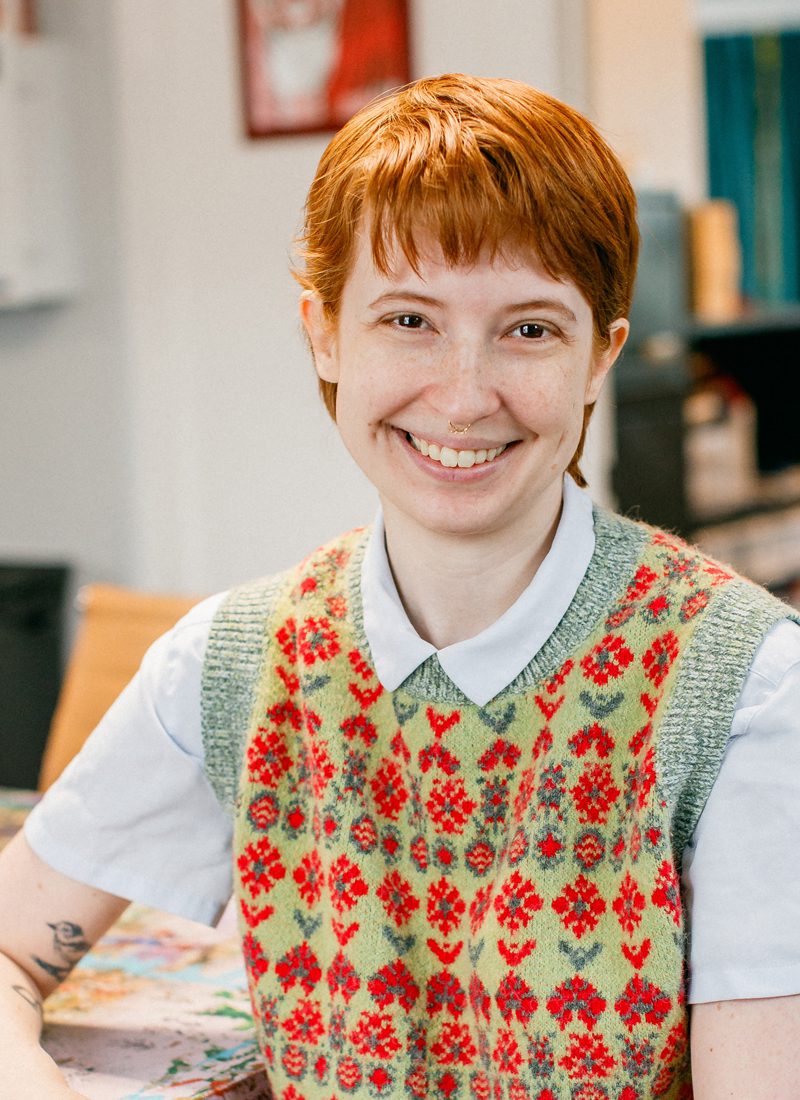
Sydney Dlhopolsky, LCAT-P (they/them)
- Complex Trauma
- Neurodivergence
- Rejection Sensitivity
- Invisible Disabilities
- LGBTQIA+ Issues
- Ethical Non-Monogamy
- Couples/Relationship Therapy
Pittsford location
Openings currently available
$100 individual self-pay rate
$120 couples/relationship self-pay rate
As we grow up, parts of our identity are sewn on like patches by those around us - parents, siblings, teachers, peers, and even society. These patches often stay with us into adulthood--when we start to realize that they may not be representative of our authentic selves, but rather of what others expect us to be. Ripping out these patches, mending the holes, and finding our true selves is a challenging and emotional process. It involves saying goodbye to people and places, rediscovering what really gives our life meaning, and a commitment to unmasking in a society that doesn’t always think highly of the people who do.
My goal is to help you through this process. This may involve finding your values, setting new boundaries, unmasking neurodivergence, exploring gender and sexuality, and/or developing healthy coping skills for the days when the world is just too much. In our sessions, we will use the tactile and sensory nature of art making to express feelings, explore identity, and process trauma. Art gently pushes our brains to express hidden thoughts and emotions, and as such, I believe art is inherently therapeutic and often surpasses what we are able to express verbally. I use a combination of art-as-therapy, personalized art activities, and person-centered talk therapy to help you understand your inner-world. I use concepts from Acceptance and Commitment Therapy (ACT) to guide our sessions. This style of therapy is rooted in accepting yourself instead of changing yourself and can help us figure out what realistic behavioral and environmental shifts will make your life more fulfilling. We’ll touch on themes of confidence, self-worth, and self-care. Additionally, I am excited to offer my clients a gender-affirming and sex-positive space. I want you to feel comfortable showing up however you are in each moment, knowing I will listen, value, and believe you.
“The privilege of a lifetime is to become who you truly are. ”
C. Jung
Get To Know Sydney!
Education & Training
I received a Master's in Creative Arts Therapy from Nazareth University in 2025. I have taken trainings in Internal Family Systems (IFS), interpersonal relationships, and am currently in the process of an advanced training in Gottman Method Couples Therapy. I prioritize reading books (non-fiction and fiction) from diverse voices that are often not represented in academic spaces. Some of my greatest insight has been gained from unexpected places, and I encourage my clients to find meaning in their interests and lived experiences.
client focus
My focus is with clients who are “othered” by society and feel the world was not designed for them to thrive in. This includes neurodivergent and LGBTQ+ populations, as well as people with trauma. I work with teens and adults with varied careers and relationship structures. In addition, I work with people who feel a deep value mismatch between their own values and the political and social structure we live in.
Therapeutic approaches
I use Acceptance Commitment Therapy (ACT) and Internal Family Systems (IFS), which are compassion and mindfulness-based treatments. They involve learning about yourself, accepting things outside of your control, and working toward authentic self-leadership. Self-leadership means feeling your emotions, but not allowing them to lead your behavior. Instead, these approaches foster value-based decision-making, which can help lead to a more fulfilling life. My approach is grounded in curiosity and creative coping strategies that are unique to each client I work with. I take a neurodiversity-affirming and anti-oppressive lens to help my clients expand their horizon of what healing and growth can look like. Instead of a focus on pathology and diagnosis, I focus on supporting meaning-making, joy, and authenticity.
areas of specialization
I work with a variety of issues; my areas of focus are late-diagnosed and high-masking neurodivergence (autism & ADHD), LGBTQIA+ issues, and complex trauma, including emotional neglect. Additionally, I have a special interest in relationships, including non-traditional relationship structures.
What does a session with you look like?
I approach sessions with compassion, humor, and authenticity. Sessions with me will typically begin with an art prompt that can be worked on throughout the session. The prompt will be based on what has been coming up for the client, but it is open-ended and flexible. We may look at the art for deeper processing and insight, but the main intention of making art is to calm the nervous system, practice creative coping strategies, and engage different parts of the brain which can help make talk therapy more effective. I am always willing to adapt sessions to fit the client; some prefer quiet art-making time, while some prefer talk therapy exclusively.
How do I know if we're a good fit?
I find that within the first 3 sessions, clients can start to feel the first signs of progress and assess for therapeutic fit. Some positive signs include feeling more comfortable in discomfort, opening up about emotions, and resonating with the therapist's insights and approach. If you find yourself repeatedly feeling misunderstood or like something is missing during sessions, this would be a good opportunity to explore this with your therapist.
I always encourage my clients to be honest with me about how they are feeling in session. The therapist-client relationship is a great opportunity to practice boundary setting, self-advocacy, and problem-solving in a safe environment. If you find yourself pulling back from a therapist, that may be a sign that they aren’t a good match, but it could also be an opportunity to explore what and why is causing that and get practice working through discomfort. Ultimately, I want the best for my clients and deeply appreciate it when clients feel able to share that they aren’t feeling aligned, so we can help them find approaches and resources that best fit their needs.